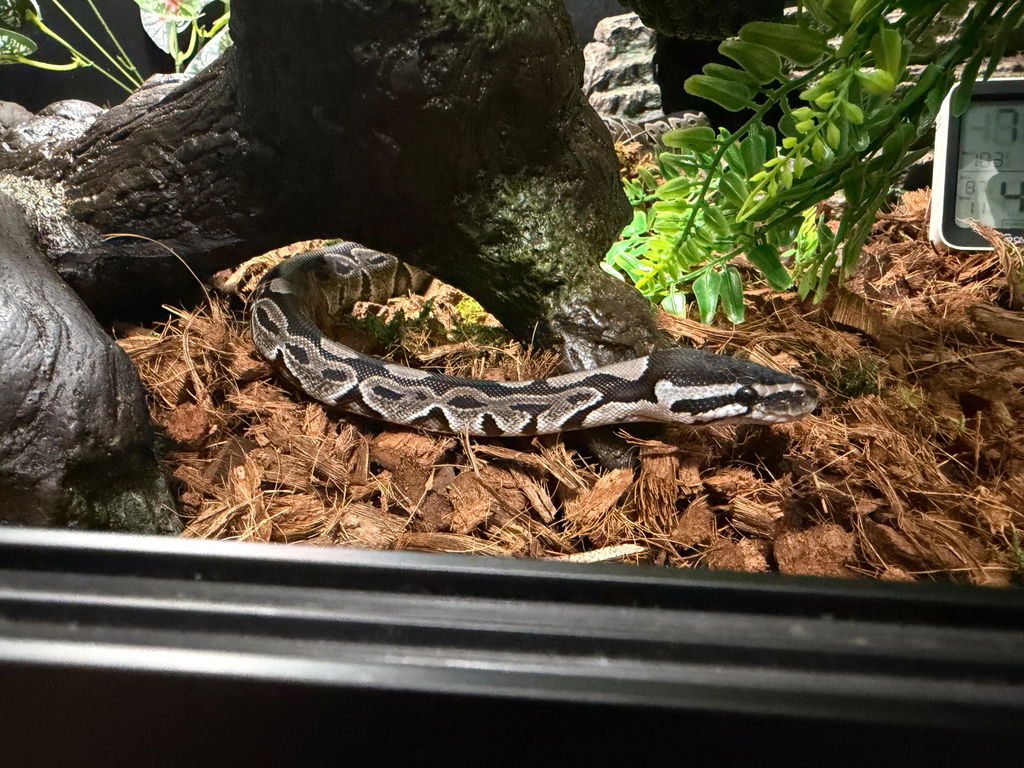
Reading Your Snake's Body Language
One of the most common questions we get from new owners isn't about feeding or enclosure setup, it's some version of "is this normal?" Ball pythons communicate constantly through behavior, they just don't do it the way a dog or cat does. Once you understand the baseline patterns, you'll find your snake is actually pretty easy to read. Here's what we walk every buyer through.
Why They're Called "Ball" Pythons
The name comes from their signature defense behavior: when threatened or startled, a ball python curls into a tight ball with its head tucked into the center of its coils. This is a purely defensive posture, not aggression, and it's one of the calmest defense mechanisms in the snake world. Compare that to species that strike, flee erratically, or musk defensively, and you start to understand why ball pythons have such a reputation as a beginner-friendly, low-drama pet. If your snake balls up when you first bring it home or during an early handling session, that's completely normal and not a sign anything is wrong.
Hiding Is a Feature, Not a Problem
New owners are sometimes disappointed that their snake spends most of the day tucked into a hide rather than out and visible. This is completely species-typical. Ball pythons are secretive, primarily nocturnal animals in the wild, spending daylight hours in burrows, rock crevices, and abandoned mammal tunnels. A captive ball python that hides most of the day and becomes more active at dusk and overnight is behaving exactly as it should. In fact, a snake that hides consistently and has access to secure hides on both the warm and cool sides of its enclosure is generally a less stressed, healthier animal than one kept in an overly exposed setup with nowhere to retreat.
Common Behaviors and What They Mean
Tongue flicking. This is your snake gathering scent information about its environment, nothing more. It's constant, normal, and a sign of a snake that's alert and engaged with its surroundings.
Hissing. A defensive warning, usually paired with a raised or pulled-back head position. It means the snake feels threatened and wants space, not that it's about to strike. Give it time and reduce handling pressure rather than pushing through it.
Head-hiding while balled up. Classic defensive posture, most common in younger or more recently acquired animals still settling into a new environment. This typically decreases significantly as trust builds over the first few weeks to months.
Restlessness or glass surfing. Repetitive movement along enclosure walls can indicate the animal is searching for a way out, often tied to an enclosure that feels too exposed, insufficient hide security, or occasionally a thermal gradient issue. This is worth troubleshooting rather than ignoring if it becomes a consistent pattern.
Pre-shed behavior. Reduced activity, dulled coloration, a blue-ish cast to the eyes, and reduced appetite in the week or so leading up to a shed are all normal. Handling should be minimized during this window since the snake's vision and comfort are both temporarily compromised.
Refusing food. Occasional feeding refusals are common and usually not cause for alarm, especially around shedding, breeding season, seasonal temperature shifts, or after a change in environment. Prolonged refusals over many weeks paired with weight loss are a different matter and worth a closer look.
Handling and Building Trust
Temperament in ball pythons isn't fixed at hatching, it develops through consistent, calm, low-stress handling over time. Animals that are handled gently and regularly from a young age, without being chased, grabbed suddenly, or handled during stressful periods like shedding, tend to become remarkably tolerant, even seemingly curious, adult snakes. We handle our hatchlings from an early age specifically so animals leaving our facility already have a foundation of comfort with human contact, rather than starting that process from zero in a new home.
A good rule of thumb: let the snake initiate exploration rather than forcing interaction, support its body fully rather than letting it dangle, and keep initial sessions short. Trust builds session by session, not all at once.
Individual Personality Is Real
Ask any experienced keeper or breeder and they'll tell you the same thing: no two ball pythons behave identically, even within the same clutch. Some are naturally bold and curious from day one. Others take months to fully settle in and rarely tolerate more than brief handling. Both are within the range of normal temperament for the species. Genetics, early handling experience, and individual disposition all play a role, and part of what we do as breeders is get to know each animal well enough to give you an honest read on its personality before it ships, not just its morph and price.
When to Actually Be Concerned
Most behavioral quirks are just quirks. What genuinely warrants attention: open-mouth breathing or audible clicking or wheezing sounds, persistent lethargy paired with a limp or unresponsive body tone, extended feeding refusal combined with visible weight loss, or any sudden dramatic change from an animal's established baseline behavior. These are the situations where reaching out to us or a qualified reptile veterinarian makes sense, rather than waiting it out.
We're Here Before and After the Sale
Every animal we produce comes with a temperament note from us based on our own hands-on time with it, not a guess. If you're not sure whether something you're seeing is normal, reach out. We'd rather field a question that turns out to be nothing than have you worry in silence.
Find Your Next Companion
Explore our current ball pythons for sale, each raised with consistent, gentle handling from an early age. Have questions about a specific animal's temperament before you buy? Just ask.