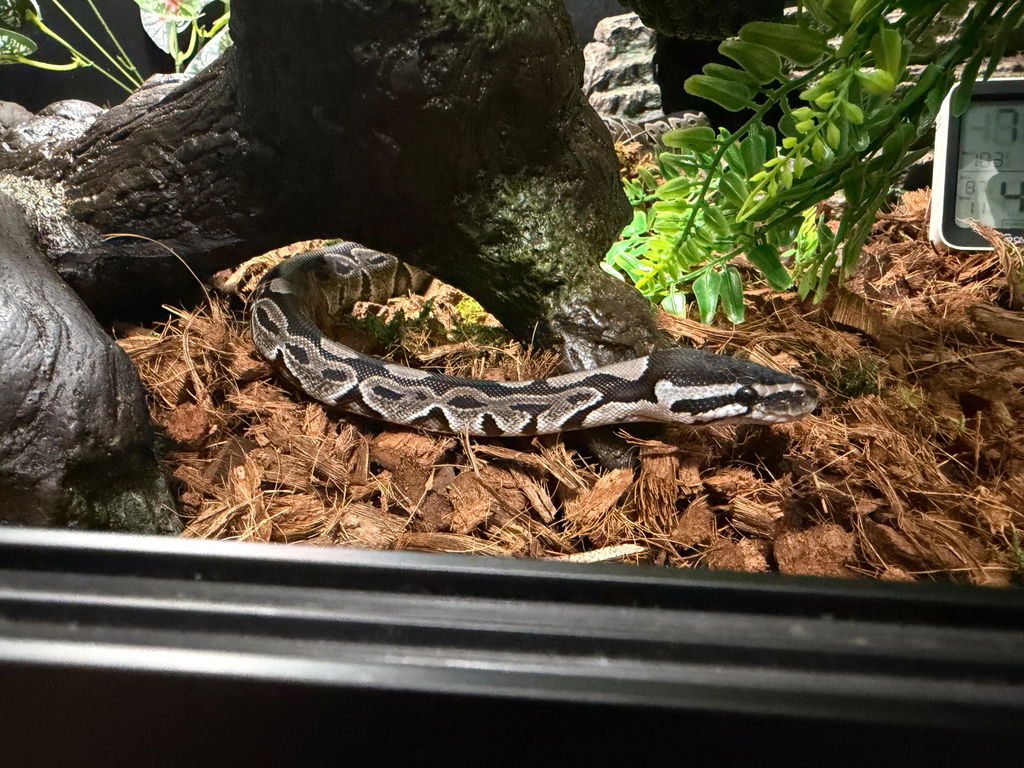
Decoding Ball Python Genetic Labels
If you've browsed ball pythons for sale online, you've likely come across listings with genetic abbreviations that look confusing at first glance: het, poss het, 100% het, and combinations of multiple traits strung together in a single title. This guide breaks down exactly what these terms mean, so you can read any listing with confidence, whether you're buying a pet or planning your own breeding project.
The Three Inheritance Patterns
Ball python morphs are produced by genes that follow one of three inheritance patterns: recessive, dominant, and co-dominant (sometimes called incomplete dominant). Understanding which pattern a given gene follows explains most of the terminology you'll encounter in a listing.
Recessive Genes
A recessive trait only shows visually when an animal inherits two copies of the gene, one from each parent. An animal with only one copy looks like a normal ball python visually but carries the gene invisibly, this is called being "het," short for heterozygous. Pied and Genetic Stripe are examples of recessive morphs.
What "Het" Actually Means
"Het for Pied" means an animal carries one copy of the Pied gene without displaying it visually. Breeding two animals that are both het for the same recessive gene produces, on average, 25 percent visual offspring, 50 percent het offspring, and 25 percent offspring with no copies of the gene at all.
What "Poss Het" Means
"Poss het," short for "possible het," indicates an animal has a chance of carrying a recessive gene based on its parentage, without genetic confirmation. This typically happens when only one parent was a confirmed visual or het carrier, meaning the offspring has a mathematical probability, often 50 percent, of carrying the gene, but it hasn't been proven through breeding or testing.
What "100% Het" Means
"100% het" means an animal is guaranteed to carry a copy of a recessive gene, typically because it was produced from a pairing where both parents carried the gene or one parent was a visual example of that recessive trait. Unlike "poss het," a 100% het label reflects certainty, not probability.
Dominant Genes
A dominant gene shows visually with just a single copy inherited from either parent. There's no "het" concept for dominant traits, an animal either visually displays the trait or it doesn't carry the gene at all. Dominant traits are more straightforward to track in breeding projects since there's no hidden genetic potential to account for.
Co-Dominant Genes
Most popular ball python morphs, including Pastel and Enchi, are co-dominant. A single copy produces a visual morph, and two copies of the same co-dominant gene typically produce a distinct, more extreme visual result called a "super" form. Pastel is a classic example, a single copy makes a Pastel, two copies make a Super Pastel with a notably different appearance.
Why Some Genes Don't Have a Super Form
Not every co-dominant or dominant gene has a documented super form, and true recessive genes never have a super form by definition, since a recessive trait already requires two copies just to display visually. If you see a gene marketed with a "super" version, that's a signal it follows a co-dominant inheritance pattern, not recessive.
Reading a Combo Morph Listing
Multi-gene combo listings stack several of these terms together, for example "Enchi Pastel het Pied" describes a visual Enchi Pastel that also carries one copy of the recessive Pied gene without displaying it. Breaking a complex listing down gene by gene, checking whether each is recessive, dominant, or co-dominant, makes even the most intimidating combo listings readable.
A Worked Example
Let's walk through a realistic pairing. If you breed a male that is 100% het Pied to a female that is also het Pied, the resulting clutch will statistically include roughly 25 percent visual Pied offspring, 50 percent het Pied offspring, and 25 percent offspring carrying no copies of the gene at all. These are population-level averages across many eggs, not a guarantee for any single individual offspring, small clutches can and do deviate from the statistical expectation.
Common Mistakes Buyers Make Reading Labels
The most common mistake is assuming "het" means an animal will visually change or eventually display the trait, it won't, a het animal looks like a normal ball python (or whatever other visual morphs it carries) for its entire life unless bred to produce visual offspring. The second common mistake is treating "poss het" and "100% het" as interchangeable, when they represent very different levels of genetic certainty and should be priced and evaluated differently. The third is not asking for parentage details when genetics matter to your purchase, a reputable breeder will always be able to explain exactly how they arrived at a given het designation.
Why This Matters Even If You're Not Breeding
Even pet-only buyers benefit from understanding genetic labels, since it clarifies exactly what you're paying for and prevents confusion about why two visually similar snakes might be priced differently based on hidden het genetics. For anyone considering future breeding, understanding these terms is essential for predicting what a given pairing might realistically produce.
A Word of Caution on "Poss Het" Pricing
Since "poss het" reflects probability rather than certainty, animals with this label are typically priced lower than confirmed 100% het animals of the same gene. If you're specifically planning a breeding project around a particular recessive trait, understand that a "poss het" animal may ultimately not carry the gene at all, only actual breeding results or genetic testing can confirm it definitively.
How We Label Our Animals
We label every animal's genetics accurately and specifically, distinguishing clearly between visual, het, poss het, and 100% het status based on documented parentage. If you have questions about a specific listing's genetics, we're happy to walk through exactly what it means for that individual animal.
Ready to Shop With Confidence?
Browse our current selection of ball pythons for sale online, with genetics clearly and accurately labeled on every listing.