Why "VPI" Matters as Much as "Axanthic"
Axanthic isn't a single gene in the ball python world, it's a category, and several genetically distinct axanthic lines exist that don't produce axanthic offspring when crossed with each other. VPI Axanthic refers specifically to the line originally established by Vin Russo of VPI, one of the founding lineages in the ball python axanthic world and still one of the most recognized and sought-after axanthic lines in the hobby today. When you're shopping for an axanthic ball python, knowing which line you're actually looking at matters just as much as knowing the trait is present at all.
What Axanthic Actually Means Genetically
Axanthic is a simple recessive trait that removes xanthophores, the pigment cells responsible for yellow tones, from the snake's coloration. The result is an animal that presents in a striking palette of black, gray, white, and brown, entirely without the yellow and gold hues found in normal ball pythons and most other morphs. Because it's a simple recessive gene, an animal needs to inherit the gene from both parents to visually express as axanthic; an animal with just one copy is a visually normal-looking het, carrying the gene without displaying it.
What Makes VPI Axanthic Look Distinct
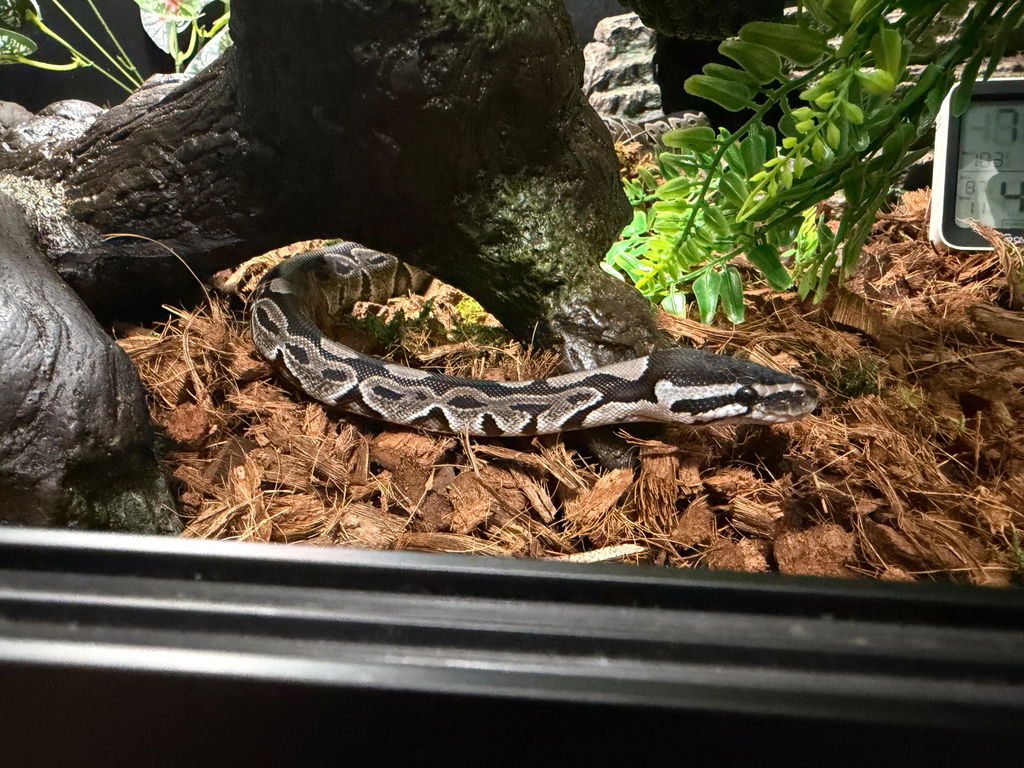
VPI Axanthics typically present with a clean, high-contrast pattern of dark gray to black saddles against a lighter silvery-gray or white background. The contrast tends to be crisp rather than muddy, which is part of what has made the VPI line so consistently popular since it was first established. As with most morphs, individual presentation can vary somewhat animal to animal and can shift further when combined with other genes, but the core VPI Axanthic look is a distinctly clean, grayscale animal that stands out immediately next to a normal ball python.
VPI Axanthic Combined With Other Genes
Because axanthic removes yellow pigment rather than adding a new pattern, it combines with a wide range of other morphs to create striking multi-gene animals. VPI Axanthic Pied, VPI Axanthic Clown, and various VPI Axanthic combinations with pattern-altering genes are all established in the hobby and tend to produce animals with the same clean black-gray-white palette layered over a different underlying pattern structure. If you're interested in a specific VPI Axanthic combination beyond a single-gene animal, it's worth asking directly about parentage, since combo animals require both parents to carry the relevant genes to reliably produce that combination. We keep clear records on every combination animal in our own program specifically so buyers asking these questions get a real, documented answer rather than a guess based on visual appearance alone.
Why VPI Axanthic Pricing Sits Where It Does
VPI Axanthics generally command a higher price than more common single-gene morphs, reflecting both the trait's relative rarity in the broader ball python gene pool and the strong, sustained demand for the line specifically. Pricing varies based on the specific animal's quality, age, sex, and whether it's a single-gene VPI Axanthic or a more complex combination involving additional genes. As with any morph purchase, we'd encourage buyers to think about pricing in the context of documented lineage rather than shopping purely on trait name alone, since lineage is what actually determines whether an animal will reliably reproduce the line's traits in a breeding project.
Why We Keep VPI Axanthic in Our Program
We maintain VPI Axanthic bloodlines in our own collection because the line has a proven, well-documented history in the hobby and consistently produces the clean, high-contrast look buyers are looking for when they specifically seek out this morph by name. Every VPI Axanthic animal we offer comes with the genetic background you'd expect from a breeder who takes lineage seriously, not just a visual match to photos you might have seen elsewhere.
What to Ask Before Buying a VPI Axanthic
If you're specifically looking for a VPI Axanthic, rather than a different axanthic line, it's worth confirming the animal's lineage traces back to the original VPI line rather than a visually similar but genetically distinct axanthic strain. Different axanthic lines don't produce axanthic offspring when crossed together, so this distinction matters significantly if breeding is part of your long-term plans for the animal, not just if you're buying purely for a pet.
Care Considerations Specific to Axanthic Ball Pythons
Axanthic ball pythons don't require any different care than standard ball pythons in terms of temperature, humidity, or feeding. The trait affects coloration only, not physiology or temperament. Standard ball python care guidelines apply fully to VPI Axanthics at every life stage, from hatchling through adult, and you can rely on the same setup and feeding approach you'd use for any other ball python in your collection.
VPI Axanthic in a Broader Collecting Strategy
For collectors thinking about how a VPI Axanthic fits into a broader collection or breeding strategy, it's worth considering the line alongside other axanthic and non-axanthic genes you may already be working with. Because axanthic is a coloration-only trait that doesn't interfere with other pattern or color genes, it pairs well as a long-term project base, giving you room to layer in additional traits over successive generations without the axanthic component limiting your options. This flexibility is part of why the VPI line specifically has stayed so consistently popular in the hobby, even as newer axanthic lines and combinations have emerged over the years.
Common Questions About VPI Axanthic Ball Pythons
Is VPI Axanthic the only axanthic line in ball pythons? No. Several genetically distinct axanthic lines exist in the hobby, including lines commonly referred to by other founding breeder names. These lines look visually similar but are not genetically compatible with each other for reliably producing axanthic offspring, which is exactly why line-specific naming matters so much in this particular trait.
Can two different axanthic lines be bred together to produce axanthic babies? Generally, no, not reliably. Because different axanthic lines arose independently, offspring from crossing two different axanthic lines are typically visual normals carrying genes for both lines, rather than visual axanthics, since the underlying mutations aren't at the same genetic locus. This is one of the more commonly misunderstood points about axanthic genetics in the hobby.
How do I verify an animal is genuinely VPI Axanthic and not a different line? Ask the seller directly about lineage and be wary of any answer that can't trace back through documented parentage. A breeder who has maintained the line seriously should be able to speak clearly to where their VPI Axanthic bloodline originated.
Does VPI Axanthic affect the snake's temperament? No. Like most morphs, axanthic is a coloration trait only and has no established connection to temperament. Individual personality varies animal to animal regardless of morph.
Are VPI Axanthics harder to breed than other morphs? Not inherently. As a simple recessive trait, VPI Axanthic follows standard recessive breeding math, the same as other single-gene recessive morphs. The main complexity comes from sourcing verified VPI-line animals to work with, not from any special difficulty in the breeding process itself.
Interested in a VPI Axanthic Ball Python?
Every VPI Axanthic we offer comes from a documented lineage with the genetic history you'd expect from a dedicated breeding program. Browse our current VPI Axanthic Ball Pythons collection, or explore our full range at Ball Pythons for Sale.
Want to see more morphs? Check out our Complete Ball Python Morph Guide, our Black Ball Python guide, and our breakdown of Advanced Morph Combinations.