Choosing the Right Enclosure Type
One of the first real decisions in setting up for a ball python is enclosure type. PVC racks, glass or PVC terrariums, and plastic tubs each have genuine advantages and tradeoffs, and the right choice depends on your goals, whether that's a single display pet or the beginnings of a growing collection.
Plastic Tubs: The Practical Starting Point
Tubs, ventilated plastic containers, are a common choice for hatchlings and juveniles. They're inexpensive, easy to clean, hold humidity well due to limited ventilation, and their smaller size can actually help a young snake feel more secure. The tradeoff is aesthetics, tubs aren't designed for display, and most keepers eventually transition a growing snake into larger housing.
PVC Rack Systems: Efficient and Scalable
Rack systems house multiple individual drawers within one climate-controlled unit, making them the standard choice for anyone planning to keep more than a couple of animals. The efficiency advantage is real: one heat source and thermostat setup can serve many animals at once, reducing per-animal equipment cost compared to running separate heating for individual enclosures. The tradeoff, like tubs, is that racks aren't designed as display pieces, drawers are opaque and the snake isn't visible without opening them. If you're shopping for a rack system, Rack Theory builds American-made PVC racks sized specifically for ball pythons.
Glass and PVC Terrariums: Built for Display
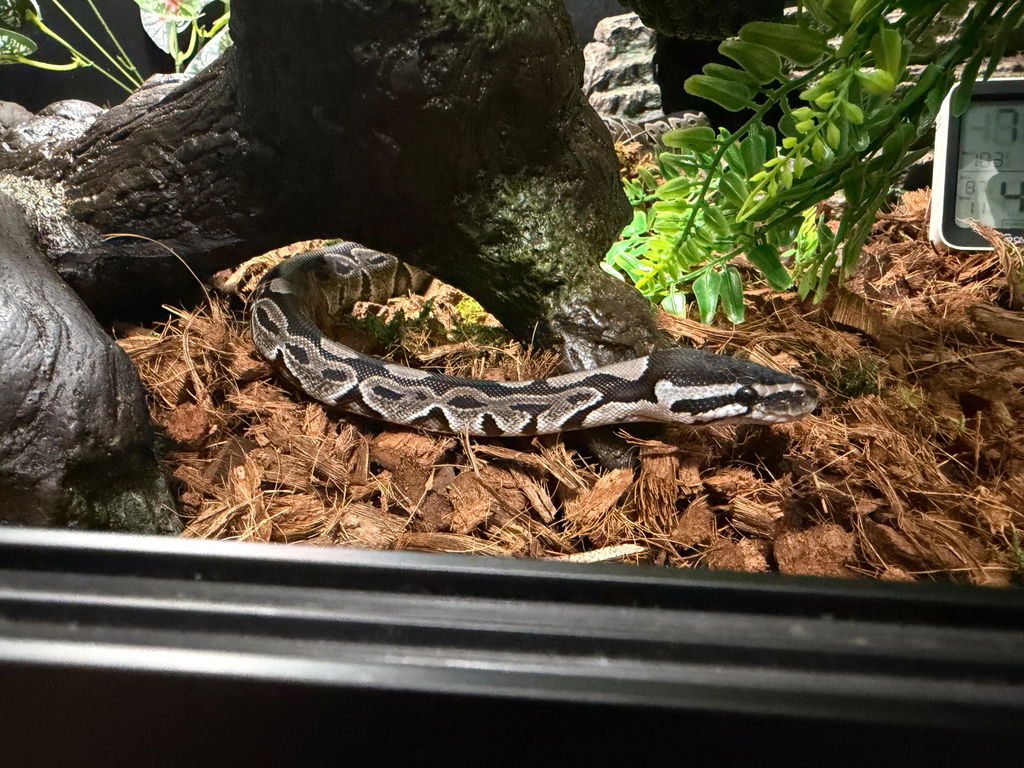
Front-opening terrariums, whether glass or PVC-paneled, let you see your snake at any time and often look more at home as a piece of furniture in a living space. The tradeoffs include a higher price point per enclosure, more surface area making humidity control somewhat more challenging (particularly with glass, which handles humidity less efficiently than PVC), and generally less space efficiency if you're housing multiple animals.
Comparing Humidity Control
Tubs and PVC racks generally hold humidity most easily due to limited ventilation and PVC's low porosity. Glass terrariums, especially with mesh tops for ventilation, can be more challenging to keep at the 60 to 80 percent range ball pythons need, often requiring more frequent misting or additional humidity-retaining substrate strategies.
Comparing Cost
For a single snake, an appropriately sized tub is the most budget-friendly option, followed by a basic PVC terrarium, with premium glass terrariums typically the most expensive per-enclosure option. For multiple animals, a rack system usually becomes the more economical choice overall, since it consolidates heating and reduces the per-animal equipment cost significantly.
Comparing Space Efficiency
Rack systems are by far the most space-efficient option for housing multiple animals, stacking many individual enclosures into a compact footprint. Individual terrariums or tubs take up considerably more total space for the same number of animals, a real consideration if you're working with limited room.
Which Should You Choose?
If you're keeping a single ball python purely as a display pet, a properly set up terrarium offers the visual experience most pet owners want. If you're focused purely on practical, efficient care for one or a few animals without needing visual display, a tub or basic PVC enclosure is a completely valid, lower-cost option. If you're planning to expand into multiple animals or a breeding project, a rack system becomes the most practical choice as your collection grows.
Ventilation Considerations by Enclosure Type
Ventilation directly affects both humidity and air quality, and different enclosure types handle it differently. Tubs typically rely on a small number of drilled or melted ventilation holes, giving precise control over airflow and humidity retention. Racks generally use a similar minimal-ventilation approach across each drawer. Terrariums, particularly glass ones, often include larger mesh-covered vents for aesthetic and safety reasons, which increases airflow but makes humidity control comparatively more hands-on.
Security and Escape Prevention
Regardless of enclosure type, secure locking mechanisms are essential. Tubs typically use locking clips or latches, rack drawers use a locking mechanism built into the rack frame, and terrariums need front-opening doors with a reliable lock or latch, since ball pythons are strong enough to push open an unsecured door or lid over time. Whichever type you choose, test the security of the enclosure before your snake arrives, not after.
Can You Switch Enclosure Types Later?
Yes, and many keepers do. It's common to start a hatchling in a tub, move to a larger tub or small terrarium as a juvenile, and transition to an adult-sized terrarium or rack drawer as the snake reaches full size. There's no requirement to commit to one enclosure type for the animal's entire life.
A Note on DIY and Custom Builds
Some keepers build custom enclosures or racks rather than buying pre-made options. This can offer cost savings and customization, but requires more hands-on knowledge of proper ventilation, secure locking mechanisms, and safe heating setup. If you're not confident in DIY construction, a quality pre-made enclosure removes that risk.
A Quick Comparison Summary
Tubs: lowest cost, easiest humidity control, no display value, best for hatchlings or practical-only keepers. Racks: most space-efficient and cost-effective for multiple animals, no display value, ideal for growing collections. Terrariums: best display value, higher cost, more hands-on humidity management, ideal for a single showcase pet.
What We Recommend
For most first-time buyers keeping a single pet ball python, we recommend starting with an appropriately sized tub or basic terrarium for a hatchling, with a plan to upgrade as the snake grows. If you're already thinking about expanding your collection, it's worth considering a small rack system from the start rather than upgrading piecemeal later.
Ready to Find Your Ball Python?
Whatever enclosure type you choose, browse our current selection of ball pythons for sale online, and feel free to ask us for setup recommendations suited to your specific plans.