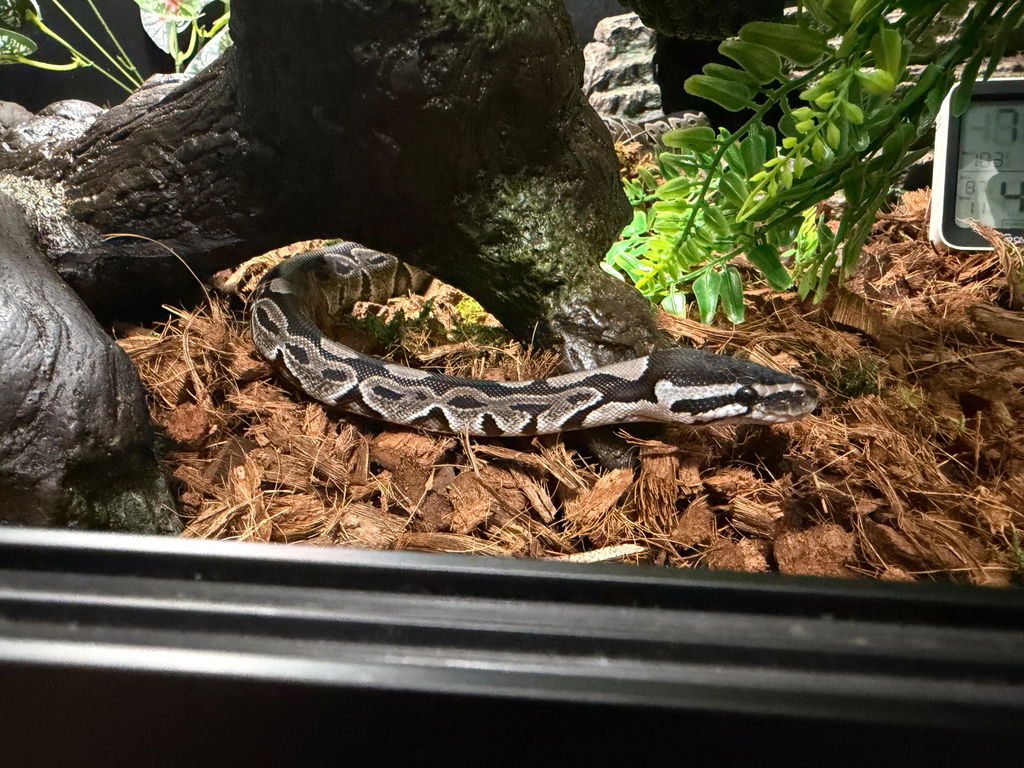
Ball Python FAQ: Real Questions From First-Time Buyers
After ten years of breeding ball pythons and talking with buyers every day, certain questions come up again and again. We've collected the most common ones here, answered honestly, so you can go into your purchase informed rather than guessing.
How big do ball pythons get?
Females typically reach 4 to 5 feet as adults, occasionally larger. Males stay smaller, usually 2.5 to 3.5 feet. This is a manageable adult size compared to many other python species.
How long do ball pythons live?
Twenty to thirty years is typical in captivity with proper care. This is a genuine multi-decade commitment, not a short-term pet.
Are ball pythons good for beginners?
Yes. Their calm temperament, manageable size, and forgiving care requirements make them one of the most commonly recommended first snakes for new reptile owners.
Do ball pythons bite?
Rarely, and almost never without a clear trigger like mishandling or feeding-response confusion. Their primary defensive behavior is curling into a ball, not striking.
What do ball pythons eat?
Appropriately sized frozen-thawed rats, typically every one to two weeks for adults, with hatchlings and juveniles eating more frequently on a smaller prey size.
Why won't my ball python eat?
Appetite loss is common and often not a sign of illness. Seasonal shifts, breeding season, shedding cycles, and stress from a recent move or handling can all cause temporary fasting. If a ball python goes an extended period without eating and shows other signs of distress, that's when a vet consultation is warranted.
How much humidity do ball pythons need?
Generally 60 to 80 percent, monitored with a reliable hygrometer rather than guessed at. Humidity that's consistently too low is one of the most common causes of bad sheds.
Do ball pythons need UVB lighting?
Unlike many lizard species, ball pythons do not have a strict UVB requirement, though some keepers provide low-level UVB as a supplemental enrichment. It is not considered essential the way it is for many reptile species.
Can I house two ball pythons together?
We don't recommend cohabitating ball pythons. Housing snakes together can create feeding complications, stress, and disease transmission risk. Each snake should have its own enclosure.
Is it safe to buy a ball python online?
Yes, when you buy from a reputable breeder with a live arrival guarantee and a track record of safely shipping animals. Look for a breeder who ships via overnight delivery with proper temperature-controlled packaging and can speak to their shipping history.
How much does a ball python cost?
Prices range enormously based on morph, from budget-friendly normals and common single-gene animals to rare, high-dollar combinations. There's a realistic entry point at nearly every budget level.
What size enclosure does a ball python need?
Hatchlings can start in smaller tubs, but adults need an enclosure generally in the 36 by 18 inch range or larger, with secure locking access.
Do ball pythons smell?
Not under normal conditions with routine enclosure cleaning. Odor issues usually point to a substrate or cleaning schedule that needs adjustment, not an inherent trait of the species.
Can ball pythons live with kids in the house?
Generally yes, with adult supervision during handling and age-appropriate expectations. See our dedicated guide on ball pythons and families for a full breakdown.
What's the difference between male and female ball pythons?
Females grow larger and are sometimes priced higher for breeding potential. Beyond size, temperament differences between sexes are generally minor and vary more by individual animal than by sex.
Do ball pythons need a heat lamp?
Most keepers use an under-tank heater or radiant heat panel rather than an overhead heat lamp, paired with a thermostat. Either can work, but the heat source must always be thermostat-controlled to prevent overheating.
How often should I handle my ball python?
A few times a week is a reasonable starting point once the animal is settled in, though every snake tolerates handling differently. Avoid handling for at least 24 to 48 hours after feeding to reduce regurgitation risk.
How do I know if my ball python is healthy before buying?
Look for clear, alert eyes, a rounded body without visible spine or rib prominence, clean vent and nostrils, and a documented feeding history from the seller. A breeder who can tell you exactly when and what an animal last ate is giving you real information a pet store often can't.
What's the difference between a captive-bred and wild-caught ball python?
Captive-bred ball pythons are hatched and raised in a controlled environment, typically feeding readily on frozen-thawed prey with lower stress and parasite risk. Wild-caught and imported animals often carry higher parasite loads, more stress-related feeding issues, and less predictable temperament. At Ghost Constrictors, every animal we sell is captive-bred at our own facility.
How often should I clean my ball python's enclosure?
Spot-clean waste as soon as you notice it, and do a full substrate change and enclosure clean on a regular schedule, typically every few weeks depending on substrate type and enclosure size. Regular spot cleaning keeps a full deep-clean from becoming an overwhelming task.
Can I feed my ball python live prey instead of frozen-thawed?
We strongly recommend frozen-thawed prey over live. Frozen-thawed eliminates the risk of a live rodent injuring your snake during feeding, and most captive-bred ball pythons take frozen-thawed prey readily when started on it from a young age.
Why does my ball python's shed come off in pieces instead of one piece?
This is almost always a humidity issue. Consistently low humidity during the shed cycle leads to incomplete, patchy sheds. Raising and stabilizing humidity in the 60 to 80 percent range typically resolves the problem going forward.
Do ball pythons recognize their owners?
Snakes don't form attachment the way mammals do, but many ball pythons do become more relaxed and tolerant of handling from familiar people over time, likely through simple habituation to a consistent, gentle handler rather than true recognition or bonding in the mammalian sense.
What should I do if my ball python escapes its enclosure?
Check low, dark, warm spaces first, since ball pythons instinctively seek out tight, secure hiding spots rather than open areas. Placing a heat source near likely hiding spots can sometimes help draw the snake back out. Preventing escapes in the first place with a properly secured, well-latched enclosure is far easier than a search after the fact.
Still Have Questions?
This FAQ covers the most common questions, but every buyer's situation is a little different. We're happy to answer specific questions directly before you buy, whether about a particular morph, enclosure setup, or shipping logistics to your state.
Ready to Find Your Ball Python?
Browse our current selection of ball pythons for sale online, every animal captive-bred at our South Georgia facility and backed by a live arrival guarantee.