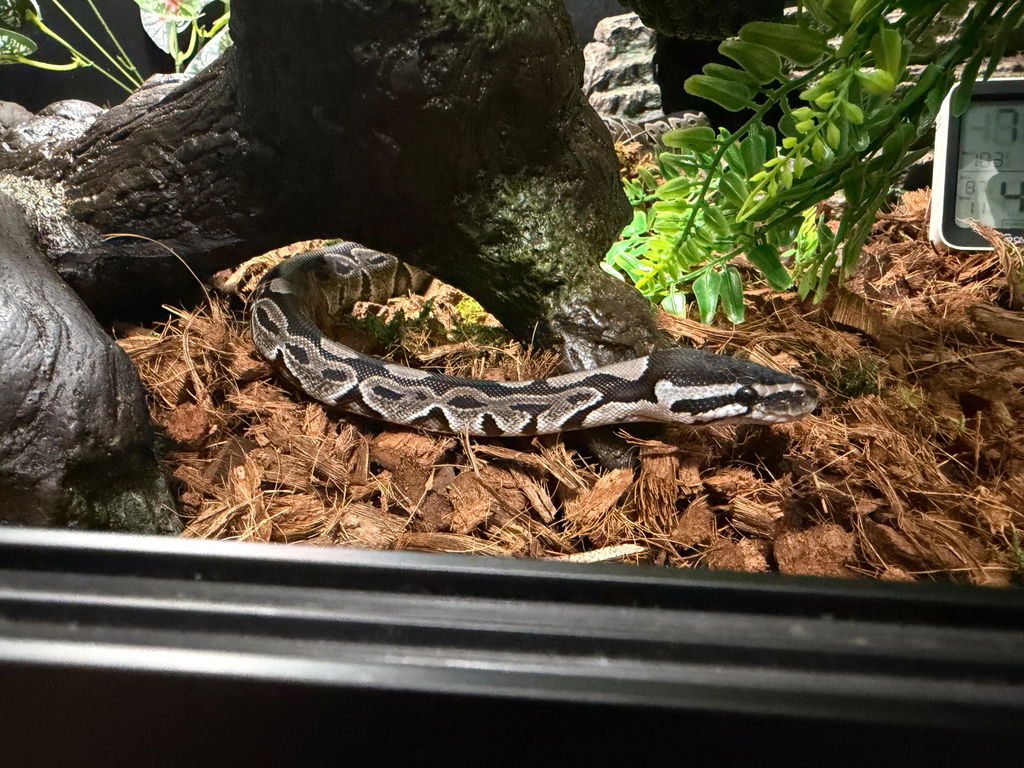
Humidity is the most commonly mismanaged aspect of ball python care. Too low and you get bad sheds, dehydration, and respiratory issues. Too high and you get bacterial and fungal growth in the substrate. The target is 60–80% and hitting it consistently requires understanding why it drops and what to do about it.
Why Humidity Matters
Ball pythons are native to the humid grasslands and open forests of sub-Saharan Africa. They live in burrows and underground retreats where humidity is naturally high and stable. In captivity, replicating that environment is your job.
Chronically low humidity causes three main problems: incomplete sheds (retained skin, retained eye caps), dehydration over time, and increased susceptibility to respiratory infections. These aren't immediate emergencies — they're slow-burn health problems that compound over months and years. A ball python kept at 40% humidity isn't going to die tomorrow, but it's accumulating problems that will shorten its life and reduce its quality.
The Four Variables That Control Humidity
1. Substrate
This is the biggest lever. Dry substrates like paper towels, reptile carpet, and aspen shavings don't hold moisture and make hitting 60% nearly impossible without constant misting. Switch to a moisture-retaining substrate:
-
Coconut fiber (loose or brick-expanded) — our recommendation and what we use across our entire operation. Holds moisture well, doesn't mold easily, looks clean.
-
Cypress mulch — excellent moisture retention, widely available, natural aesthetic.
-
Bioactive mix (coconut fiber + topsoil + sand) — best long-term humidity stability but requires more setup.
2. Enclosure Type
Glass aquariums with screen lids are the enemy of ball python humidity. Screen lids dump moisture constantly — even with a moisture-retaining substrate, you'll struggle to hold 60% in a glass tank with a fully open screen top.
Solutions:
-
Cover 70–80% of the screen top with aluminum foil, a piece of plexiglass, or even a damp towel. Leave a section open for ventilation.
-
Switch to PVC enclosures or Racks. These have minimal ventilation by design and hold humidity effortlessly. This is the professional standard for a reason. If you're scaling up from a single enclosure to a small collection, Rack Theory builds American-made PVC racks built specifically around this principle — the closed design holds humidity without the constant misting a screen-top tank demands.
-
Tub setups hold humidity very well due to minimal air exchange. Great for hatchlings, juveniles, and adults. These can be filled with enriching items.
3. Misting
A light misting of one side of the enclosure every 2–3 days helps maintain ambient humidity without soaking the substrate. Use a simple spray bottle — nothing elaborate needed.
The goal is moist substrate, not wet. If the substrate smells or feels swampy, you've gone too far and need to allow more drying time before the next misting.
4. Water Dish Size
A larger, open water dish adds ambient humidity through evaporation. Placing it on or near the warm side increases evaporation rate. This is a passive humidity boost that requires no active intervention.
How to Monitor Humidity
A digital hygrometer with a probe placed inside the enclosure is the accurate way to monitor. The cheap dial hygrometers that come bundled with some reptile kits are notoriously inaccurate — don't trust them. A $15–$20 digital hygrometer from Amazon is reliable enough for this purpose.
Check it periodically, especially after a substrate change, during dry seasons, or when you first set up an enclosure.
Troubleshooting Common Humidity Problems
Can't get above 50%: Enclosure is losing moisture too fast. Cover more of the screen top. Switch substrate to coconut fiber or cypress mulch. Add a larger water dish.
Humidity crashes overnight: Heating is drying the air. Check that your heat source isn't directly drying out the substrate. A heat pad under the enclosure affects substrate humidity less than an overhead ceramic heat emitter.
Humidity too high (above 85%): Improve ventilation slightly. Don't over-mist. Ensure the substrate isn't waterlogged — if it is, remove the top layer and allow it to dry before replacing.
Fine during day, low at night: Your home's HVAC is probably pulling humidity down at night. Cover more of the screen top and add a humid hide as a microclimate buffer.
The Humid Hide: Your Best Tool
A humid hide — a container with damp sphagnum moss placed on the warm side — creates a microclimate of near-100% humidity that the snake can access whenever it needs it. For shedding animals it's invaluable. For animals in dry climates it's an effective buffer against the limits of ambient humidity control.
Setup: Take any opaque hide container, fill the bottom third with sphagnum moss, wet the moss until damp (not dripping), place on the warm side over the heat source. Replace or re-wet the moss every 1–2 weeks.
Browse Ball Pythons for Sale →
For more on care basics, see our Ball Python Care Guide, our Temperature Guide, and our Lighting & UVB Guide.