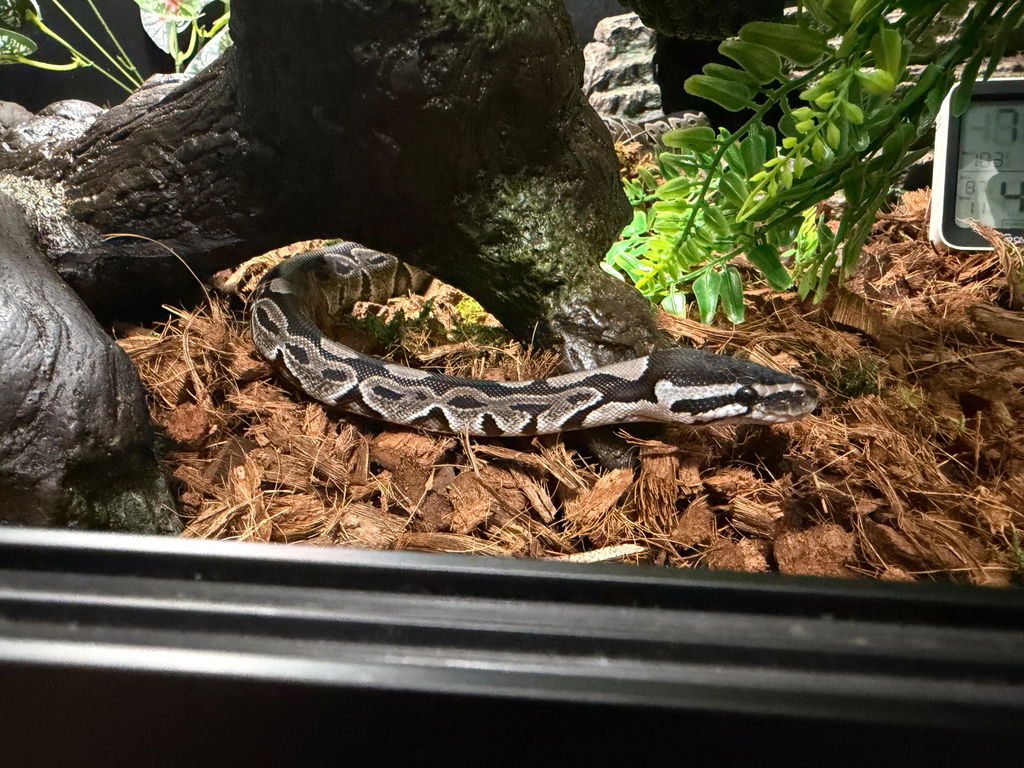
A Decades-Long Commitment, Not Just a Pet
When someone asks us how long a ball python lives, we always pause before answering, because the honest answer changes how most people think about the purchase. A healthy, well-cared-for ball python in captivity can live 20 to 30 years. That's not a typo, and it's not an outlier number we're using for effect. It's a realistic range backed by decades of keeper and breeder experience, our own animals included. Some of the oldest documented captive ball pythons have lived past 40. When you bring one home, you're not signing up for a few years of ownership. You're making a commitment that can outlast a college degree, a first house, or a decade of career changes.
We think this matters enough to say clearly, upfront, before anyone buys from us: a ball python is a long-term animal. We'd rather you know that now than be surprised by it in year twelve.
Wild Lifespan vs. Captive Lifespan
In their native range across West and Central Africa, ball pythons face a very different set of pressures than captive animals do. Predation, disease, parasite load, food scarcity, and habitat disruption all shorten wild lifespans considerably, and wild ball pythons rarely approach the ages we see in captivity. Estimates for wild lifespan generally fall well short of 20 years.
Captivity removes most of those pressures. No predators, consistent food availability, controlled temperature and humidity, and veterinary care when something goes wrong all add up to a much longer life. This is one of the more striking examples in the reptile world of how much environment affects longevity. It's also why captive-bred animals, raised from hatch in a controlled setting, tend to outlive wild-caught or wild-hatched animals brought into the pet trade later in life.
What Actually Determines How Long Your Snake Lives
Genetics set a ceiling, but husbandry determines whether an animal gets anywhere close to it. A handful of factors matter more than anything else over a ball python's lifetime.
Consistent thermal gradient. Ball pythons regulate their body temperature by moving between warmer and cooler zones in their enclosure. A stable, correctly ranged thermal gradient supported by a quality thermostat isn't optional equipment, it's the single biggest factor in long-term organ health and digestion.
Appropriate humidity. Chronically low humidity contributes to shedding problems, respiratory stress, and dehydration over time. Chronically high humidity with poor ventilation invites bacterial and fungal issues. Neither extreme is fatal overnight, but both take a slow toll across years.
Feeding routine and body condition. Overfeeding and obesity are increasingly common causes of reduced lifespan and organ strain in captive ball pythons, more so today than underfeeding. A snake kept at a healthy, lean body condition with an appropriate feeding schedule tends to live longer and stay reproductively healthy longer than one that's overfed on an aggressive growth schedule.
Stress load. Chronic stress from excessive handling, an exposed enclosure with no hide security, or an unstable environment doesn't just affect behavior, it affects the immune system over time. A calm, secure snake is generally a healthier one.
Genetic line and starting health. This is where knowing your breeder actually matters. An animal bred from a healthy, well-established line, hatched from a well-fed and properly conditioned female, and raised without early-life stress or illness starts life with real advantages. This is part of why we track lineage, feeding history, and health background on every animal that leaves our facility. We're not just selling you a snake, we're handing you a head start on the next two or three decades of its life.
Do Morphs Affect Lifespan?
This comes up often, and the honest answer is: generally, no, not directly. Most single-gene and multi-gene combinations don't carry inherent lifespan penalties. The exceptions are certain homozygous combinations with documented health or neurological considerations, which any knowledgeable breeder should be upfront with you about well before a sale, not after. Outside of those specific known cases, a Pied, a Clown, a Desert Ghost, or a Genetic Stripe ball python has the same 20 to 30 year potential as a normal-pattern animal, provided husbandry is solid.
What Long-Term Ownership Actually Looks Like
A ball python's needs don't stay static across a multi-decade lifespan. A hatchling's enclosure, feeding schedule, and handling tolerance look very different from a mature adult's. Owners should expect to upgrade enclosure size at least once, likely twice, as the animal grows. Feeding frequency drops significantly with age, often to once every two to three weeks or longer for adults. Breeding-age females also require additional attention around follicle development and egg-laying cycles if breeding is part of the plan.
None of this is complicated, but it does mean a ball python isn't a "set it and forget it" pet for two years and done. It's closer to a long-term relationship with an animal that will still be with you when today's hatchling setup is a distant memory.
Our Approach to Longevity
Every animal we produce comes from a breeding program we've built and refined over years, prioritizing health and feeding response as much as we prioritize genetics and pattern expression. We know an animal's lineage, feeding history, and temperament before it ever ships, and we stay available to answer husbandry questions well past the sale, because a 20-plus year commitment deserves ongoing support, not just a one-time transaction.
If you're weighing whether a ball python is the right long-term pet for your life, we'd rather talk it through honestly than make a quick sale. Reach out with questions before you buy, we'd rather answer them upfront.
Ready to Bring One Home?
Browse our current selection of ball pythons for sale, including baby ball pythons ready to start their journey with you. Every animal ships with our live arrival guarantee, direct from our family to yours.