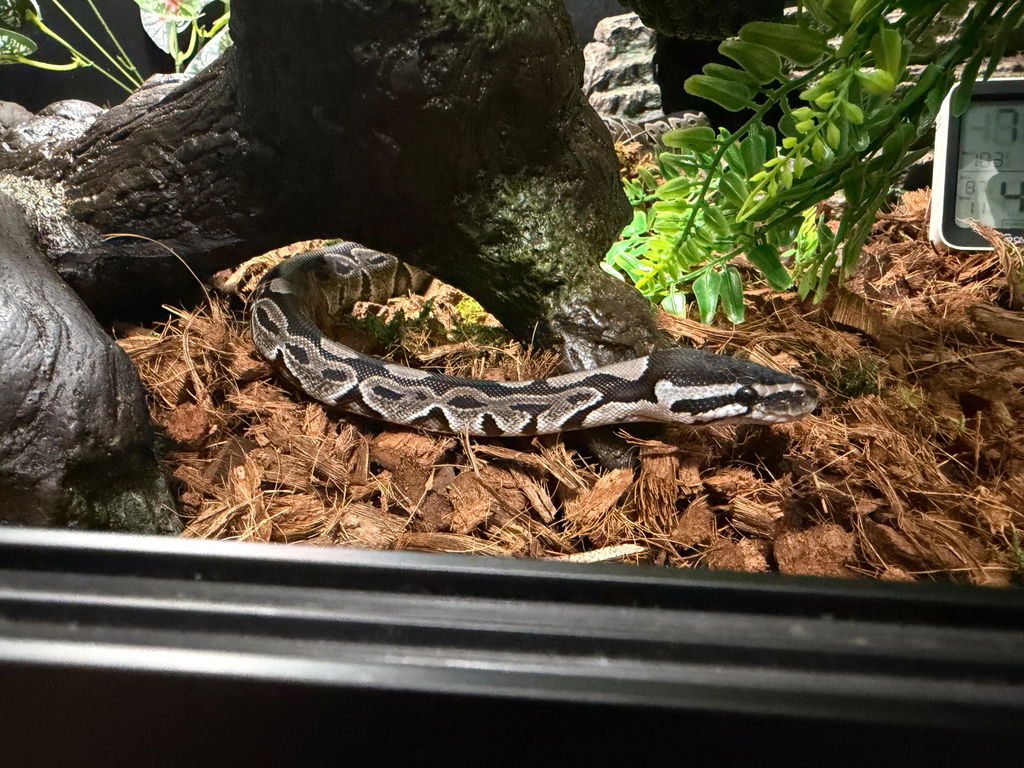
Two of the Most Popular Beginner-Friendly Snakes
Ball pythons and boa constrictors are consistently among the first snakes people consider when getting into reptile keeping, and for good reason: both are generally docile, both have manageable care requirements compared to many other species, and both come in an enormous range of colors and patterns through selective breeding. But they're different animals with different long-term commitments, and the right choice really does depend on what you're looking for.
Size: The Biggest Practical Difference
This is where the two species diverge the most. An adult female ball python typically reaches somewhere between 3 and 5 feet, with males usually staying smaller. A boa constrictor, depending on the specific locality or bloodline, commonly reaches 6 to 8 feet as an adult, with some females growing even larger. That's not a small difference when you're thinking about long-term enclosure space, and it's the single biggest factor we'd point new owners toward when deciding between the two.
A full-grown adult ball python is comfortably housed in a 40 gallon-equivalent enclosure. A full-grown boa constrictor generally needs something in the range of a 6 to 8 foot enclosure at minimum, which is a meaningfully larger footprint in your home and a larger ongoing investment in heating and equipment to match. Our sister company Rack Theory builds a 4x2x2 PVC reptile habitat that covers a boa well through its juvenile and subadult stages, plus larger PVC habitats and racks built around bigger 80-series tubs on their rack pages for once a boa reaches full adult size.
Temperament
Both species are generally regarded as calm, and both have earned reputations as beginner-friendly for that reason. Ball pythons are famous for their defensive strategy of curling into a tight ball rather than striking when stressed, which is where the species gets its name. Most captive-bred ball pythons rarely bite and tend to be easy to handle once acclimated.
Boa constrictors are also typically docile, though individual temperament can vary more by locality and lineage than it does with ball pythons. Some boa constrictors, particularly certain Colombian lines, have a reputation for being a bit more food-motivated or reactive during feeding time, which is worth knowing if feeding response is a concern for you.
Lifespan and Commitment
Both species are long-term commitments. Ball pythons commonly live 20 to 30 years in captivity with proper care, and boa constrictors have a similar range, often 20 to 30 years as well, with some individuals living even longer. Neither species is a short-term pet, and that's worth sitting with before bringing either one home. You're making a decision that will likely span decades, not years.
Feeding Requirements
Ball pythons are relatively light eaters for their size, typically taking a single appropriately sized rodent every 1 to 2 weeks as adults. Boa constrictors, given their larger adult size, require proportionally larger prey and, for bigger individuals, may need to move up to rabbit-sized prey rather than rodents alone. This has real cost implications over the life of the animal, since larger prey items cost more per meal, and a boa constrictor's larger overall size means a bigger long-term feeding budget than a ball python's.
Cost of Entry and Ongoing Costs
Initial purchase price varies enormously for both species depending on morph and genetics, so it's hard to make a blanket statement there. Where the cost difference becomes more predictable is in ongoing care: a boa constrictor's larger adult enclosure, higher heating demands to maintain temperature across more square footage, and larger prey items all add up to a higher ongoing cost of care compared to a similarly cared-for ball python.
Genetic Variety and Morphs
Both species have been selectively bred for decades, producing an enormous range of colors and patterns. Ball pythons currently have one of the largest and most well-documented morph markets of any commonly kept snake, with genetics ranging from simple recessive traits to complex multi-gene combinations. Boa constrictors have their own substantial morph market as well, though the overall variety and depth of documented genetic combinations tends to be somewhat narrower than what's available in ball pythons.
If genetics and breeding projects are part of what draws you to reptile keeping, ball pythons currently offer one of the deepest and most active genetic hobbies of any snake species, which is a meaningful part of why we've built our own program around them. If it's boa genetics specifically you're curious about, we cover our own lines in our boa constrictor morphs guide.
Availability and Sourcing
Both species are widely available from captive breeders across the country, which matters for animal welfare and for your own peace of mind about the animal's health history. We'd always recommend buying either species from a breeder who can speak directly to the animal's feeding history, genetics, and lineage rather than a source that can't answer those questions with any specificity.
Which One Should You Choose?
If manageable adult size, lower ongoing feeding costs, and one of the deepest genetic hobbies in the reptile world matter to you, a ball python is likely the better fit. If you have the space and budget for a larger animal and are drawn to the boa constrictor's size and presence, that's a completely valid choice too, provided you go in with realistic expectations about the space and cost commitment involved.
It's also worth thinking honestly about your living situation over the next two to three decades, not just the next few years. A ball python's more modest adult footprint tends to travel better through life changes like moving apartments or downsizing, while a boa constrictor's larger enclosure is a bigger fixture to plan around long-term. Neither consideration should be the sole deciding factor, but both are worth weighing alongside temperament and personal preference.
Neither species is objectively "better" than the other. They're simply built for somewhat different owners, and knowing the size and cost realities up front is the best way to make sure whichever one you choose is a good long-term fit.
Common Questions When Comparing the Two
Are ball pythons or boa constrictors easier for a first-time owner? Both are commonly recommended as beginner species, but ball pythons' smaller adult size and lighter feeding requirements generally make them the lower-commitment option in terms of space and ongoing cost, which is a meaningful consideration for a first snake.
Do ball pythons or boas handle better? This comes down heavily to the individual animal and how it was raised, more than the species itself. Captive-bred, well-handled animals of either species typically make calm, manageable pets. We'd caution against choosing based on species alone when handling temperament is the priority; ask about the specific animal's history instead.
Can I keep a boa constrictor in the same setup as a ball python? Not really, at least not long-term. A boa constrictor's adult size requires meaningfully more enclosure space and a stronger heating setup to maintain a proper thermal gradient across that larger footprint, so a ball python-sized enclosure won't work for a full-grown boa.
Which species has a stronger breeder community and genetic market? Ball pythons currently have one of the largest, most active breeding communities of any snake species, with an especially deep and well-documented range of morphs and genetic combinations, which is part of why we've focused our own breeding program on them specifically.
Considering a Ball Python?
If the size, feeding requirements, and genetic variety of ball pythons sound like the right fit for you, browse our current selection at Ball Pythons for Sale, including our popular Pied Ball Pythons and Spotnose Ball Pythons collections, and reach out anytime if you have questions about sizing, care, or genetics before you decide.
For more on buying with confidence, see our Ball Python for Sale Online page, our page on What's Included When You Buy From Us, and The Real Deal: Why I Still Breed Ball Pythons.