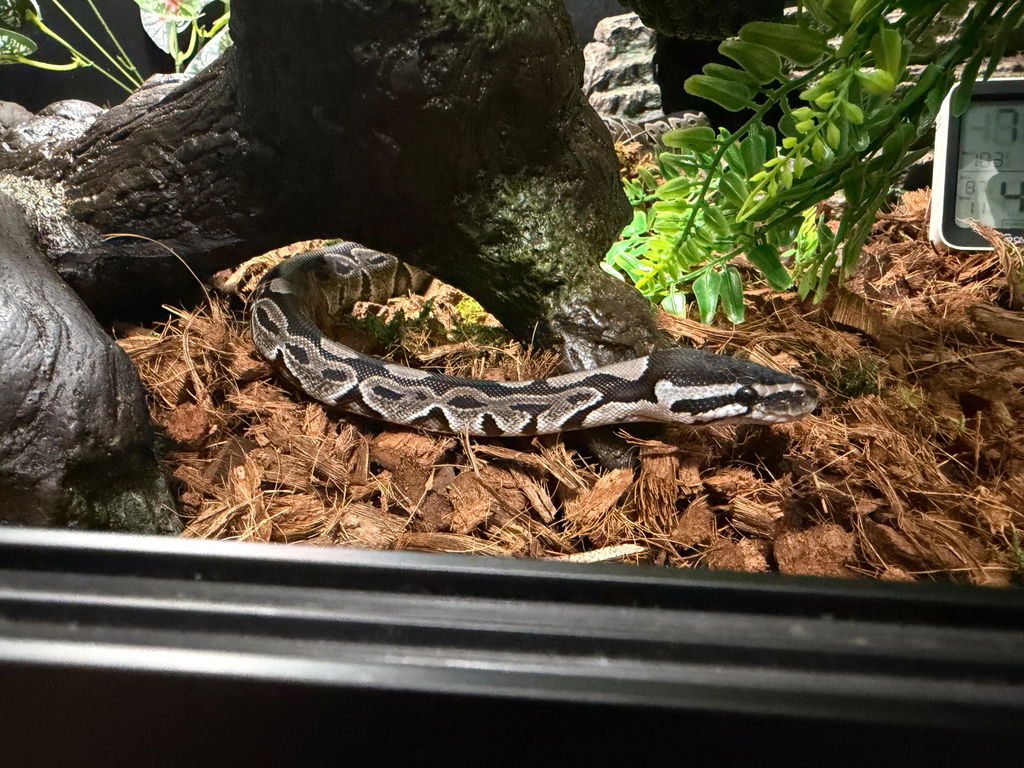
Choosing Your First Pet Snake
If you've decided you want a pet snake but haven't settled on a species, you're facing more choices than you might expect. Corn snakes, king snakes, rosy boas, and ball pythons all get recommended for beginners, and each has real merits. After ten years of breeding and talking with first-time snake owners every week, we consistently point people toward ball pythons, and the reasons come down to more than personal preference.
Temperament Comes First
The single biggest factor in a good beginner snake is temperament, because a defensive or high-strung animal makes every interaction stressful for both the snake and the owner. Ball pythons are among the calmest snakes in the hobby. They rarely strike defensively, they tolerate handling well once acclimated, and their instinct under stress is to curl into a tight ball rather than to bite or flee erratically. Compare that to species known for speed and skittishness, and it's easy to see why ball pythons build confidence in new owners rather than eroding it.
Size Matters More Than People Expect
A snake that outgrows its housing quickly, or that requires a room-sized enclosure as an adult, adds real cost and complexity for a beginner. Ball pythons top out around 4 to 5 feet for females and considerably less for males, which means a single appropriately sized adult enclosure will serve the snake for its entire life. This is a meaningful advantage over larger constrictor species that can require custom enclosures costing hundreds or thousands of dollars once fully grown.
Predictable, Manageable Care Requirements
Every pet reptile has care requirements, but some species have narrower margins for error than others. Ball pythons are forgiving of minor fluctuations in temperature and humidity as long as the general ranges are met, they feed readily on easy-to-source frozen-thawed rats, and they don't require specialized lighting like UVB-dependent species do. None of this means ball pythons are maintenance-free, they still need a properly set up enclosure and a consistent routine, but the learning curve is gentler than many alternatives.
How Ball Pythons Compare to Other Popular Beginner Snakes
Corn snakes are also frequently recommended for new owners, and they're a legitimately good choice, generally a bit more active and food-motivated than ball pythons, which some owners enjoy. Where ball pythons tend to win out is handling tolerance; corn snakes can be quicker and more prone to darting when picked up, which some new owners find intimidating even though it isn't dangerous.
King snakes are hardy and food-driven but can be nippier as juveniles and require careful housing since some king snake species will eat other snakes, including their own kind, so caution is needed with any cohabitation. Rosy boas are calm and small, genuinely excellent beginner snakes, but they grow much less dramatically and some owners find the smaller size and duller coloration less visually rewarding compared to the vast morph variety available in ball pythons.
None of this makes other species bad choices, they're all viable. It's simply that when you weigh temperament, manageable size, forgiving care requirements, and the sheer visual variety of available morphs together, ball pythons consistently come out as the strongest overall beginner package.
The Morph Variety Advantage
One underrated reason ball pythons dominate the beginner snake conversation is the sheer range of available colors and patterns. Whether you want a classic normal pattern, a striking pastel, or something rarer like a Desert Ghost or Genetic Stripe, there's a ball python morph to match almost any aesthetic preference and budget. This variety keeps the hobby engaging long after the initial learning curve, which is part of why so many first-time ball python owners end up staying in the hobby for years.
What You'll Need Before Bringing One Home
Regardless of which beginner-friendly species you choose, you'll need a secure enclosure sized appropriately for the animal, a reliable heat source with a thermostat, a hide on both the warm and cool sides, appropriate substrate, and a water dish large enough for soaking. For ball pythons specifically, humidity control matters more than it does for some drier-climate species, so a plan for maintaining 60 to 80 percent humidity is essential before your snake arrives.
Buying From a Breeder vs. a Pet Store
Wherever you land on species, sourcing matters as much as the species choice itself. Pet store snakes are sometimes wild-caught or come from large-scale operations with limited individual attention, and staff may not be able to tell you much about a specific animal's history. Buying from a dedicated breeder means the person selling you the snake actually raised it, knows its feeding history, and can speak honestly about its temperament, information that's difficult to get any other way.
Cost Comparison Across Beginner Species
Budget is a real factor for most first-time buyers, and it's worth understanding how ball pythons stack up. Normal and single-gene ball python morphs are often priced comparably to corn snakes and king snakes at the entry level, while ongoing costs, feeder rodents, enclosure heating, and occasional supplies, are similar across all these species. Where ball pythons diverge is at the high end: rare morphs and complex genetic combinations can command prices far beyond what any corn snake or king snake typically sells for. This means ball pythons offer both a low-cost entry point and a long-term collecting hobby for those who want to pursue it, a combination few other beginner species can match.
Common Mistakes First-Time Buyers Make Choosing a Species
The most common mistake we see is choosing a species based on appearance alone without researching adult size and care requirements. The second is underestimating the multi-decade commitment involved, ball pythons and most of their beginner-friendly alternatives are all long-lived animals. The third is buying impulsively from the first source available rather than researching a breeder's reputation, feeding history documentation, and shipping guarantees. Taking the time to get these three things right, species fit, long-term commitment, and breeder quality, sets up a far better outcome than rushing the decision.
Our Take, From Ten Years of Breeding
We breed ball pythons because we believe they're genuinely the best overall beginner snake available today, not because they're the only option. If after reading this you're still weighing other species, that's a reasonable position, every snake on this list can make a great first pet in the right home. But if you want the combination of manageable size, forgiving care, calm temperament, and nearly unlimited visual variety, ball pythons are hard to beat. If you're still torn, reach out directly, we'd rather talk you through the realistic pros and cons than sell you an animal that isn't the right fit.
Ready to Get Started?
Browse our current selection of ball pythons for sale online, every animal captive-bred at our South Georgia facility, shipped with a live arrival guarantee, and backed by a breeder who can answer real questions about the specific snake you're considering.