Why Sourcing Matters as Much as Species Choice
When people research ball pythons for sale online, most of the focus goes toward morph, price, and size. Just as important, and often overlooked, is where the animal actually comes from. Captive-bred and wild-caught ball pythons are the same species, but the differences in health, temperament, and long-term outcomes between the two are significant enough that every buyer should understand them before purchasing.
What "Captive-Bred" Actually Means
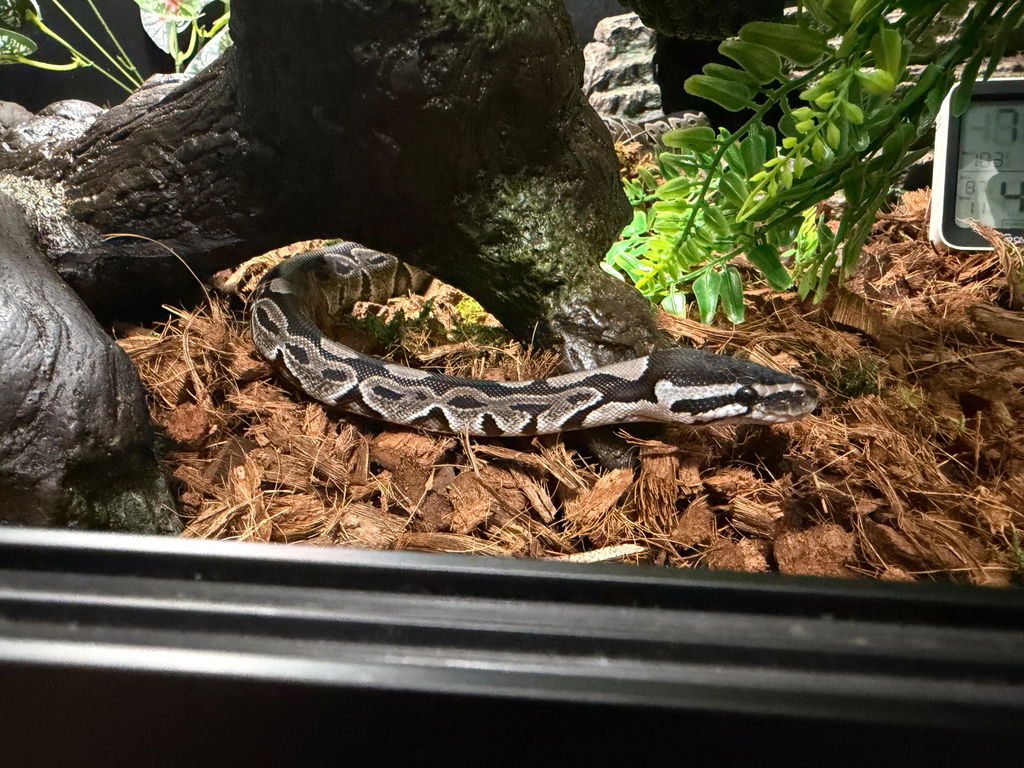
A captive-bred ball python is hatched and raised entirely in a controlled breeding environment, never taken from the wild. Reputable breeders, including us, can trace an animal's lineage back through parent stock, document its full feeding history from hatching forward, and speak specifically to how that individual animal has behaved throughout its life. This isn't marketing language, it's a fundamentally different level of information than is available for an imported animal.
What "Wild-Caught" and "Farmed" Mean
Wild-caught animals are collected from their native range and imported for the pet trade. A related category, sometimes called "farmed" or "ranched," involves eggs or animals collected from the wild and raised in semi-controlled conditions before export. Both categories carry meaningfully different risk profiles than true captive-bred animals, even when farmed animals are marketed with softer language that can make them sound more similar to captive-bred stock than they actually are.
Health Differences
Wild-caught and imported ball pythons typically carry a higher parasite load than captive-bred animals, since they've had exposure to wild environments and often stressful transport and holding conditions before ever reaching a buyer. Captive-bred animals, raised from hatching in a clean, controlled setting, start with a substantially lower baseline health risk. This doesn't mean every wild-caught animal is unhealthy or that every captive-bred animal is guaranteed healthy, but the odds are meaningfully different between the two categories.
Feeding Reliability
This is one of the most practical differences for a buyer. Captive-bred ball pythons are typically established on frozen-thawed prey from a young age, meaning they feed reliably and predictably. Wild-caught animals often arrive as inconsistent or reluctant feeders, sometimes taking months of patient work to convert onto frozen-thawed prey, if they convert at all. For a first-time buyer especially, this difference alone can be the difference between a smooth ownership experience and a frustrating one.
Temperament and Stress
Wild-caught animals carry the stress of capture, transport, and unfamiliar captive conditions in a way captive-bred animals simply never experience. This often translates to more defensive behavior, higher baseline stress, and a longer adjustment period, if the animal adjusts well at all. Captive-bred ball pythons that have been handled regularly since hatching tend to be dramatically calmer and more predictable, which matters enormously for a pet you're planning to interact with regularly.
Conservation and Ethical Considerations
Wild collection for the pet trade has genuine impacts on native ball python populations in their range countries. Choosing captive-bred stock removes any demand pressure on wild populations entirely, since captive breeding programs are self-sustaining and don't rely on continued wild collection. For buyers who care about the broader impact of their purchase, this is a meaningful factor beyond the practical health and temperament considerations.
How to Tell the Difference When Buying
The clearest signal is whether a seller can speak specifically to an individual animal's hatch date, parentage, and feeding history. A true captive-bred breeder can answer these questions immediately and specifically. Vague answers, inability to name parent animals, or unusually low prices relative to a given morph's typical value are all reasons to ask more questions before buying.
Common Myths About Wild-Caught Animals
One persistent myth is that wild-caught animals are somehow "hardier" or more genetically robust than captive-bred stock. In practice, the opposite is usually true: the stress of capture and transport, combined with unknown parasite exposure, tends to make wild-caught animals more fragile in a captive setting, not less. Genetic diversity arguments sometimes get raised in defense of wild-caught imports, but for the average pet buyer, this consideration is far less relevant than the practical realities of health and feeding reliability.
Another myth is that "farmed" or "ranched" animals are functionally equivalent to captive-bred. While farming practices vary, many farmed animals still begin life in wild or semi-wild conditions before being collected, meaning they can carry many of the same health and stress-related risks as fully wild-caught imports, even if the label sounds gentler.
Questions to Ask Any Breeder Before You Buy
Regardless of where you're shopping, a few direct questions can reveal a lot. Ask when and where the specific animal hatched. Ask what it's currently eating and when it last ate. Ask whether the seller bred the animal themselves or is reselling stock sourced elsewhere. A breeder confident in their own captive-bred program will answer all of these clearly and specifically, without hesitation.
Why This Matters More Than Price Alone
It can be tempting to chase the lowest price available, but a cheaper wild-caught or farmed animal often costs more in the long run, through vet bills for parasite treatment, extended feeding struggles, and a higher risk of early loss. A slightly higher upfront price for a genuinely captive-bred, well-established animal is frequently the better value once the full picture is considered.
What This Looks Like in Practice
Imagine two ball pythons listed at similar prices, one described only as a "pastel ball python, healthy," the other listed with a hatch date, parent genetics, current weight, and last feeding date. The second listing reflects a seller who actually knows the animal's full history, which is only possible with genuine captive-bred stock raised in-house. That level of detail is difficult, often impossible, for a reseller of wild-caught or farmed animals to provide honestly.
Our Standard
Every ball python we offer at Ghost Constrictors is captive-bred at our own South Georgia facility. We hatch, raise, and establish every animal on frozen-thawed prey ourselves, which means we can speak specifically and honestly about each snake's lineage, feeding history, and temperament, because we're the ones who raised it from day one.
Ready to Buy With Confidence?
Browse our current selection of ball pythons for sale online, every animal genuinely captive-bred, feeding reliably, and backed by a live arrival guarantee.