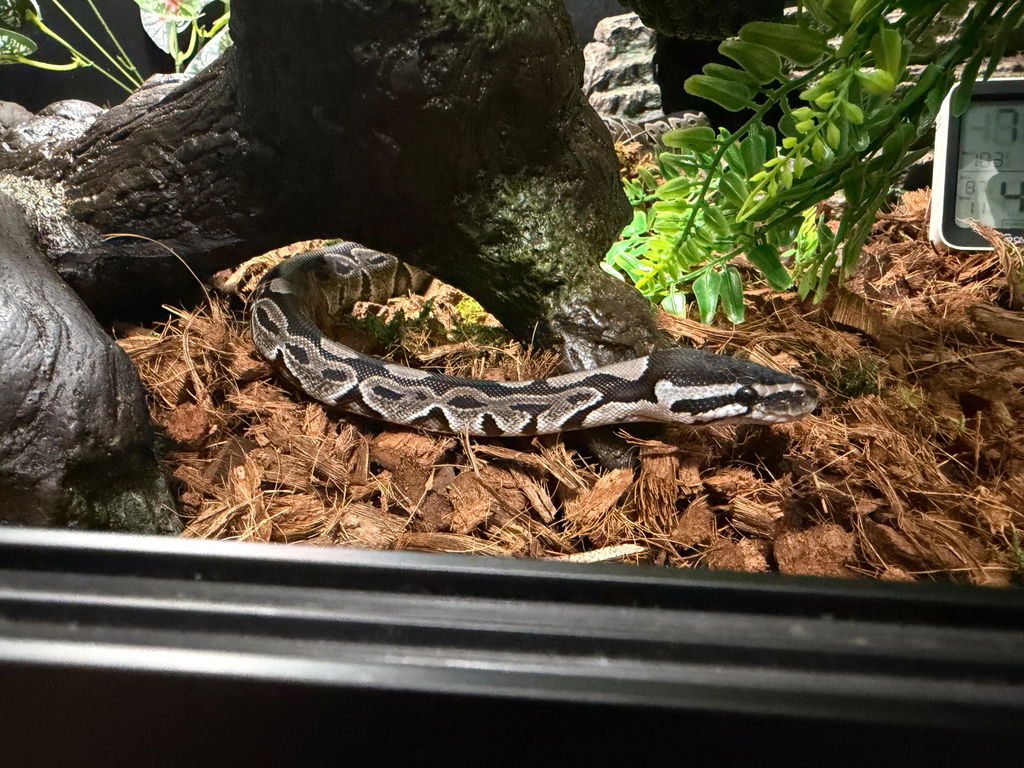
Prevention Starts With Understanding the Root Causes
Most ball python health issues we hear about from owners trace back to one of a small handful of root causes: an incorrect thermal gradient, humidity outside the ideal range, poor enclosure hygiene, or stress from an unstable environment. The good news is that once you understand what causes each common issue, prevention becomes straightforward. Here's what to watch for and how to stay ahead of it.
Respiratory Infection
This is one of the more serious issues a ball python can develop, and it's almost always tied to husbandry, specifically temperatures that run too cold, humidity that's chronically too low or too high without adequate ventilation, or an enclosure with poor air exchange.
Signs to watch for: open-mouth breathing, audible wheezing or clicking sounds, mucus around the nostrils or mouth, and lethargy.
Prevention: maintain a correct, stable thermal gradient with a quality thermostat, keep humidity in the appropriate range for your setup and substrate, and ensure the enclosure has adequate airflow even while retaining humidity. A respiratory infection caught early is very treatable with veterinary care. Left untreated, it can progress quickly, so this isn't a wait-and-see situation.
Shedding Problems (Dysecdysis)
Incomplete or patchy sheds, especially retained eye caps or shed stuck around the tail tip, are almost always a humidity issue rather than anything more serious.
Prevention: maintain adequate ambient humidity throughout the shed cycle, and provide a humid hide or damp substrate area the snake can access on its own terms during pre-shed. If a shed does come off incomplete, a shallow, lukewarm soak followed by careful removal of any retained pieces (or a vet visit for stubborn eye caps) resolves it. Chronic, repeated shedding problems usually mean the humidity baseline needs adjusting, not a one-time fix.
Scale Rot and Skin Infections
Prolonged contact with damp, dirty substrate is the primary cause here. It shows up as discolored, blistered, or soft-looking scales, most often on the belly.
Prevention: spot-clean waste promptly, do full substrate changes on a regular schedule, and avoid substrate that stays soggy rather than just appropriately humid. A clean, dry-to-the-touch substrate surface with humidity maintained through other means (humid hides, misting schedules appropriate to your setup) prevents the vast majority of cases.
Mites
External parasites are more often introduced from new animals, other reptiles, or contaminated decor than they are a sign of poor care, but an infestation left unaddressed does become a health problem, contributing to stress, poor shedding, and in severe cases anemia.
Signs to watch for: small dark specks moving on the snake or substrate, excessive time spent soaking in the water bowl, and unusually stressed behavior.
Prevention: quarantine any new animal for a minimum of 30 to 60 days before introducing it near existing collections, and inspect new arrivals closely. If mites do appear, a combination of enclosure decontamination and appropriate treatment resolves it, but early detection makes the process much faster.
Obesity and Overfeeding
This has become one of the more common preventable health issues we see in captive ball pythons, more so than underfeeding by a wide margin. An overfed snake carries excess fat around the body and internal organs, which contributes to reduced lifespan, reproductive complications in females, and organ strain over time.
Prevention: feed appropriately sized prey on a reasonable schedule for the animal's age and size rather than maximizing growth speed, and monitor body condition visually over time. A healthy ball python should have a smoothly tapered body shape, not pronounced folds or rolls. If you're unsure whether your snake's weight is on track, we're happy to weigh in, feeding history and growth curve questions are something we field regularly.
Regurgitation
Usually caused by handling too soon after a meal, feeding prey that's too large, or feeding during a period of stress (such as right after a home transition or during a shed cycle).
Prevention: wait at least 48 hours after feeding before handling, size prey appropriately relative to the widest part of the snake's body, and avoid feeding during obviously stressful windows. If regurgitation happens, wait longer than usual before offering the next meal to let the digestive system reset, and reduce prey size on the next attempt.
The Common Thread
Nearly every issue on this list traces back to the same handful of environmental fundamentals: temperature, humidity, hygiene, and appropriate feeding. Get those right and consistent, and the vast majority of health problems simply don't arise in the first place. This is also why we're careful about the animals we produce and the information we send home with every buyer, a healthy start matters, but so does knowing what to maintain going forward.
We're Here If Something Doesn't Look Right
If you're ever unsure whether something you're seeing is a minor, self-resolving issue or something that needs a vet's attention, reach out to us directly. We'd rather answer a question early than have you guess.
Start With a Healthy Animal
Every ball python we produce comes from a health-focused breeding program with a documented feeding and growth history. Browse our current ball pythons for sale and buy with the confidence of knowing exactly what you're getting.