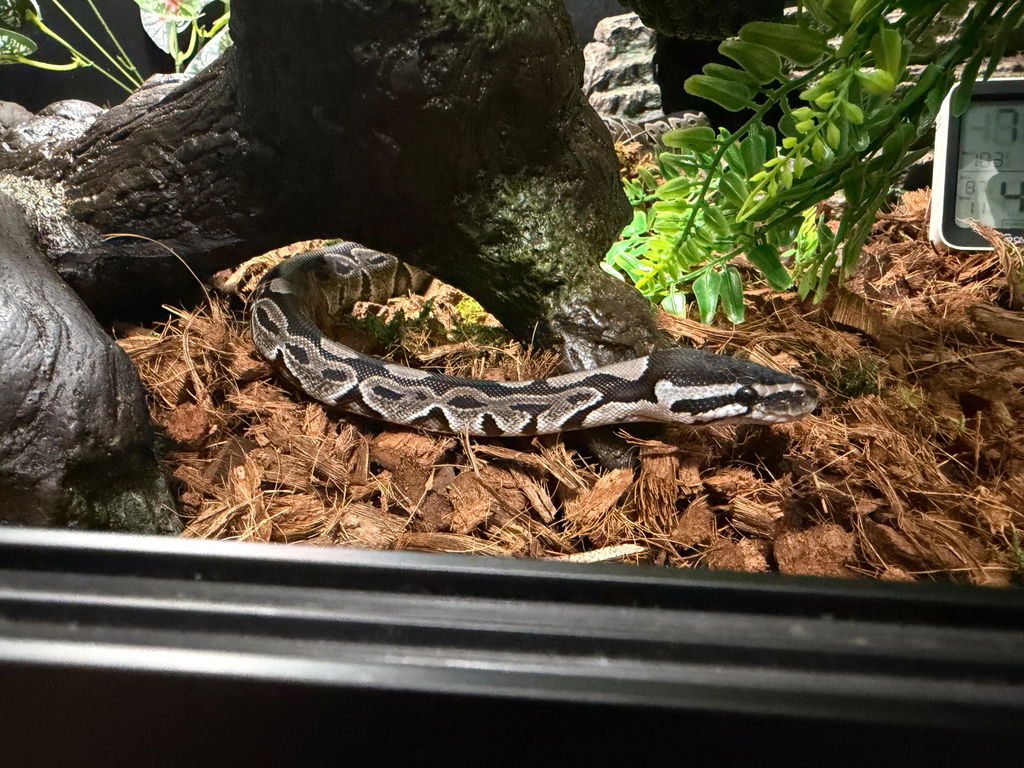
If you're drawn to pattern over color, the Genetic Stripe ball python is unlike anything else in the hobby. While most morph discussions revolve around color mutations, the Genetic Stripe does something entirely different — it eliminates the standard ball python pattern completely and replaces it with a bold, clean dorsal stripe running the full length of the animal. At Ghost Constrictors, Genetic Stripe ball pythons are one of our signature programs, and we're going to tell you exactly what makes this morph so special.
What Genetic Stripe looks like
A visual Genetic Stripe ball python is immediately identifiable. The typical ball python body pattern — the alien-head oval markings running down each side, the dark background with lighter centers — is completely gone. In its place is a thick, light-colored dorsal stripe running from the neck to the tail tip, flanked on each side by dark brown or black stripes. The sides of the body are patternless or nearly so, and the belly is clean and unmarked.
The head resembles a normal ball python in shape but with reduced black pigmentation and a more subdued earthy coloration. The overall impression is of a streamlined, graphic animal — less busy than a normal or most designer combos, with a bold visual statement that stands apart from anything else in a collection. Well-expressed animals with unbroken, continuous dorsal stripes are especially prized.
Genetic Stripe genetics: simple recessive
Genetic Stripe is a simple recessive mutation, which means both parents must carry the gene to produce visual Genetic Stripe offspring. A snake with only one copy looks completely normal — it's a het Genetic Stripe — and carries no visual indication of the gene whatsoever. Two hets bred together produce a 25 percent chance of visual offspring per egg, 50 percent hets, and 25 percent clean normals. Two visual Genetic Stripes bred together produce all visual Genetic Stripe offspring.
The original and only line was imported by Bob Clark Reptiles, who produced the first visual Genetic Stripe babies, with Vida Preciosa International producing a clutch the same year from hets they had purchased from Bob. Because Genetic Stripe is a true recessive with only one established line, proving out hets through breeding is the standard way to confirm genetic status — and why buying from a breeder with documented lineage matters more here than with co-dominant morphs where visual confirmation is immediate.
The best Genetic Stripe combos
Genetic Stripe's pattern-altering nature makes it one of the most interesting genes to combine, because the results can be dramatically different from either parent gene alone.
Genetic Stripe Clown — sometimes called the Kiki Ball — is the combination that serious G-Stripe breeders build toward. The clown gene produces its own aberrant, reduced pattern, and when it meets the complete pattern elimination of Genetic Stripe, the results are extraordinary — clean, high-contrast, almost abstract animals that look unlike any other ball python. Clown Genetic Stripes represent years of breeding investment and command prices in the $1,000 to $3,000 range and above for quality animals.
Genetic Stripe Desert Ghost is another top-tier combination. Desert Ghost enhances color and reduces dark pigmentation, and on a Genetic Stripe body it creates a brilliantly colored striped animal with clean gold and tan tones running alongside the dark lateral stripes. The anti-browning property of Desert Ghost means these animals stay vibrant as adults.
Pastel Genetic Stripe is the most accessible combo in the G-Stripe program. Pastel brightens the natural tones of the Genetic Stripe body and adds yellow to the dorsal stripe. Prices for Pastel Genetic Stripes run $150 to $350, making this an excellent entry point for keepers who want to own a visual G-Stripe without investing in multi-recessive animals.
Other strong combinations include Spotnose Genetic Stripe, which adds pattern refinement and a distinctive head stamp to the striped body, Yellowbelly Genetic Stripe for lighter belly tones and cleaner overall color, and Enchi Genetic Stripe for richer oranges and increased contrast.
Genetic Stripe prices
Single-gene visual Genetic Stripe hatchlings typically sell in the $200 to $400 range from reputable breeders, with well-expressed animals at the top of that range. Het Genetic Stripe animals sell for $50 to $150 depending on additional genes carried.
Multi-gene combos scale from there. Pastel Genetic Stripe runs $150 to $350. A Genetic Stripe Het Clown male can reach $250 to $500 based on sex and additional genes. Visual Genetic Stripe Clowns — the double-recessive Kiki Ball — start around $800 to $1,200 for males and substantially higher for females.
Caring for your Genetic Stripe ball python
Genetic Stripe ball pythons need exactly the same care as any other ball python. The pattern mutation affects appearance only — not temperament, feeding, health, or lifespan. Warm side 88 to 92 degrees, cool side 76 to 80, humidity 60 to 80 percent, moisture-retaining substrate, two snug hides, clean water bowl. Feed frozen-thawed rats on a regular schedule appropriate for the animal's size and growth stage.
If you're ready to add a Genetic Stripe to your collection or start building a G-Stripe breeding project, browse our Genetic Stripe ball pythons at Ghost Constrictors. We breed G-Stripe and multi-gene G-Stripe combos in our South Georgia facility, raise every animal on frozen-thawed feeders, and ship overnight with a live arrival guarantee. View our full ball python collection or reach out to discuss a breeding project.
Curious about other morphs? Check out our Complete Ball Python Morph Guide, our VPI Axanthic Ball Python guide, and our Black Ball Python guide.