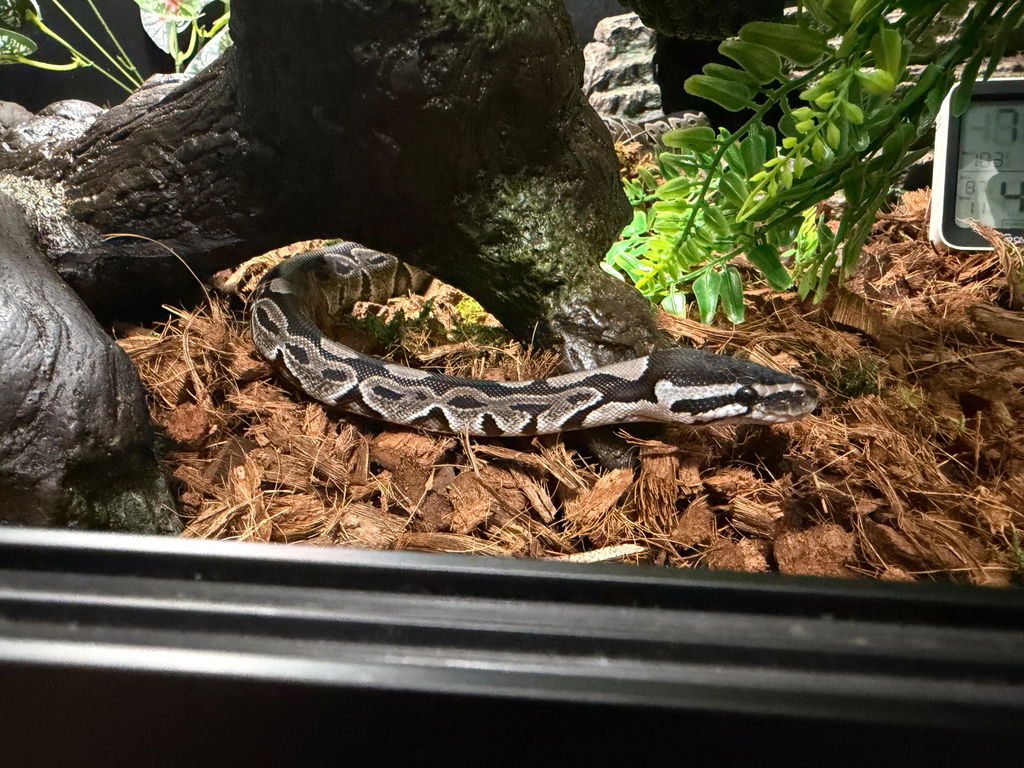
Thinking About Breeding Ball Pythons?
Moving from keeping ball pythons as pets to breeding them is a significant step, one that involves real financial investment, time commitment, and knowledge beyond basic pet care. This guide covers the honest realities to consider before starting a breeding project, so you go in with accurate expectations rather than assumptions.
It's a Business, Not a Hobby Shortcut to Profit
A common misconception is that breeding ball pythons is an easy way to make money from a hobby you already enjoy. In reality, successful breeding operations require significant upfront investment in proven breeding stock, appropriate housing for multiple animals, and years of patience before a breeding project becomes profitable, if it ever does at the scale most people attempt.
Understanding Your Foundation Stock
Breeding outcomes depend entirely on the genetics of your founding animals. Before starting, you need a clear plan for which genes you want to work with, an understanding of how those genes are inherited, and a realistic budget for acquiring proven or genetically documented breeding stock, which typically costs more than pet-only animals of the same morph.
Space and Housing Requirements
Breeding means keeping multiple animals, often many more than a pet owner would ever house. This requires a genuine plan for rack systems or multiple enclosures, reliable climate control across your entire collection, and space that most residential setups aren't originally designed to accommodate at scale.
The Time Commitment
Breeding seasons require close monitoring, tracking female weights and condition, managing temperature cycling to trigger breeding behavior, monitoring for ovulation and egg development, and being available for egg-laying, which can happen at unpredictable times. This is a significantly larger time investment than simply keeping pet snakes.
Incubation and Hatching
Once eggs are laid, successful incubation requires precise temperature and humidity control over roughly two months, along with the knowledge to recognize and address problems during incubation. Hatching itself brings its own considerations, from assisting difficult hatches when necessary to establishing every hatchling on frozen-thawed prey.
Establishing Hatchlings for Sale
Every hatchling needs individual housing, a proper first shed, and a documented first feeding before it's ready to sell. This is where the real day-to-day labor of breeding shows up, dozens of hatchlings each needing individual attention during their first weeks of life.
Understanding the Market
Before breeding for specific genetic combinations, research current market demand and pricing for those genes. Popular combos can shift in value over time as more breeders produce them, and a genetic combination that's valuable today may be significantly more common, and less valuable, by the time your own offspring are ready to sell.
Record Keeping
Serious breeding projects require meticulous records: parentage, pairing dates, egg counts, incubation conditions, hatch dates, and individual feeding histories for every animal produced. This isn't optional bookkeeping, it's what allows you to honestly and specifically answer the exact questions buyers should be asking you.
Starting Small
Most successful breeders started with a small handful of proven pairs rather than attempting a large-scale operation immediately. This allows you to learn the realities of incubation, hatchling care, and sales before scaling up, and it limits your financial exposure while you're still building experience.
Common Mistakes First-Time Breeders Make
The most frequent mistake is underestimating total cost, focusing on the price of foundation animals while overlooking rack systems, incubators, additional feeder costs for a growing collection, and veterinary care across more animals. The second is breeding before fully understanding the genetics involved, leading to unexpected or undesirable outcomes in a clutch. The third is not having a sales plan in place before hatchlings arrive, leaving a breeder with dozens of young animals and no established way to place them responsibly.
Ethical Considerations Beyond Profit
Every animal produced is a living creature that will need a home for potentially 20 to 30 years. Responsible breeding means thinking beyond the excitement of a successful clutch to the long-term outcome for every single hatchling, including having a plan for animals that don't sell as quickly as hoped, and being honest with buyers about genetics, health, and feeding history for every animal you place.
Building Relationships in the Hobby
Successful long-term breeders typically build relationships with other breeders, both for acquiring foundation genetics and for honest feedback as they develop their program. Engaging with the broader reptile keeping community, forums, local herpetological groups, and other breeders, can provide valuable perspective that's difficult to gain in isolation.
Questions to Ask Yourself Before You Start
Do you have the space for a growing collection, not just your current pair? Do you have a realistic budget that accounts for years before meaningful profitability, if any? Do you have a plan for selling offspring responsibly, to buyers who will provide good homes? Are you prepared for the ethical responsibility of dozens or hundreds of animals depending on your consistent care?
Is Breeding Right for You Right Now?
There's no shame in deciding you're not ready to breed yet, or that keeping ball pythons purely as pets is the right fit for your situation. Plenty of experienced keepers with years in the hobby choose never to breed, and that's a completely valid path. If you do decide breeding is right for you, taking the time to genuinely prepare, financially, logistically, and in terms of knowledge, sets up a far better outcome for both you and every animal your program eventually produces.
Our Own Experience
We've been breeding ball pythons for over ten years, and we're happy to talk honestly with anyone seriously considering starting their own project, including the parts that aren't as glamorous as the finished, healthy hatchling photos suggest.
Looking for Foundation Stock?
Browse our current selection of ball pythons for sale online, including documented het and proven genetics suited for buyers building their own breeding projects.