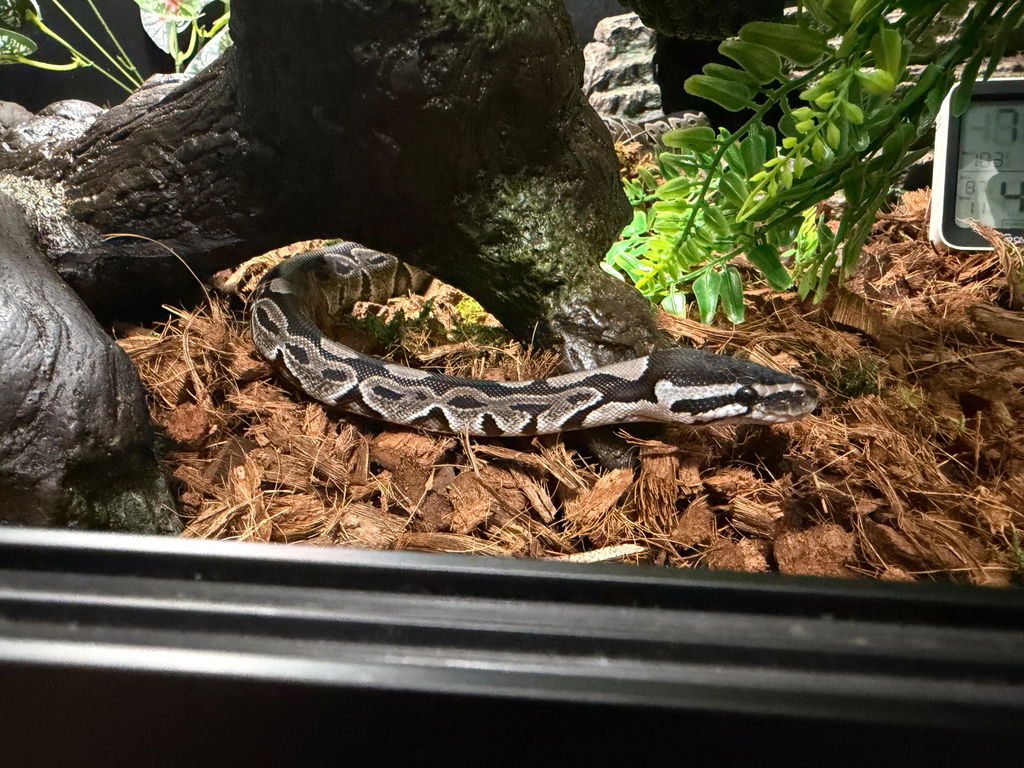
Ball pythons have a well-earned reputation as the most handleable snakes in the hobby. Calm, slow-moving, and rarely defensive once established, they're the reason most people recommend them as a first snake. But "handleable" doesn't mean "handle whenever you want" — there are right and wrong ways to approach handling, especially in the early weeks with a new animal.
The First Week: Hands Off
When a new ball python arrives — whether from us or anywhere else — leave it alone for 5–7 days. No handling. Let it explore the enclosure, find its hides, and establish a sense of security in its new environment.
Transit is stressful. A new enclosure is unfamiliar. A new keeper is an unknown. Give the animal time to decompress before you add handling to the list of new stressors.
After 5–7 days, offer food. Wait until the animal has successfully eaten before you begin regular handling. A snake that hasn't established a feeding response in its new home isn't ready for handling stress.
How to Pick Up a Ball Python
Approach from the side, not from above. Ball pythons are prey animals and approach from above mimics a predator. Even calm, established animals can react defensively to top-down approaches.
Slide your hand under the front third of the body and lift with support. Support as much of the body as possible — a snake dangling unsupported will feel insecure and try to find something to grip. Let it move through your hands at its own pace.
Don't grab or restrain. Ball pythons don't need to be held tightly to be controlled. Let the animal move while you support its weight.
How Long to Handle
New animals: Start with 5–10 minutes per session, 2–3 times per week. Build up from there as the animal becomes comfortable.
Established animals: 20–30 minutes per session is appropriate for most adults. Some keepers go longer without issue, but watch the animal for signs of stress.
Never handle: Within 48 hours of feeding (allow 72 hours to be safe). During shed cycle (eyes blue through shed completion plus 24 hours). When the animal shows consistent defensive posture in a session.
Reading Ball Python Body Language
Understanding what your snake is telling you makes every interaction better.
Relaxed: Slow, exploratory movement. Tongue flicking regularly. Body loose, not tensed. Head moving in a relaxed, curious way.
Alert but calm: Head up, tongue flicking rapidly. The snake is scenting its environment. This is normal during handling.
Defensive: Tight coil with head tucked (balling). S-curve neck posture. Hissing. Quick, jerky movements. In this state, put the animal back and try another day.
Stress indicators: Constantly trying to escape, not settling at all during a session, musking (releasing a foul odor), or striking. Any of these means end the session.
Ball Pythons and Striking
A ball python bite is not medically serious — they have no venom and their teeth are small. It's startling more than painful. That said, most established ball pythons almost never bite.
The situations that most commonly cause bites:
-
Handling immediately after feeding (the animal is in feeding mode and can mistake a warm hand for prey)
-
Handling during shed (reduced vision, increased defensiveness)
-
Approaching from above rapidly
-
Smelling like a rodent during handling (wash hands before handling)
If your snake strikes at you during handling, put it back calmly. Don't punish, don't shake the animal. Calm, consistent handling over time is what produces a calm, handleable snake.
Building Trust Over Time
Ball pythons don't "bond" with keepers the way a dog does. But they do habituate — they learn through repeated neutral experiences that you are not a threat. Consistent, calm handling produces consistent, calm animals.
The keepers who have the best experiences with their ball pythons handle regularly, read the animal's body language, and respect its signals. The keepers who have the worst experiences handle erratically, ignore stress signals, and wonder why their snake is defensive.
Consistency is the whole job.
Browse Ball Pythons for Sale →
For more on care basics, see our Ball Python Care Guide, our list of Best Snakes for Handling, and our Shedding Problems guide.