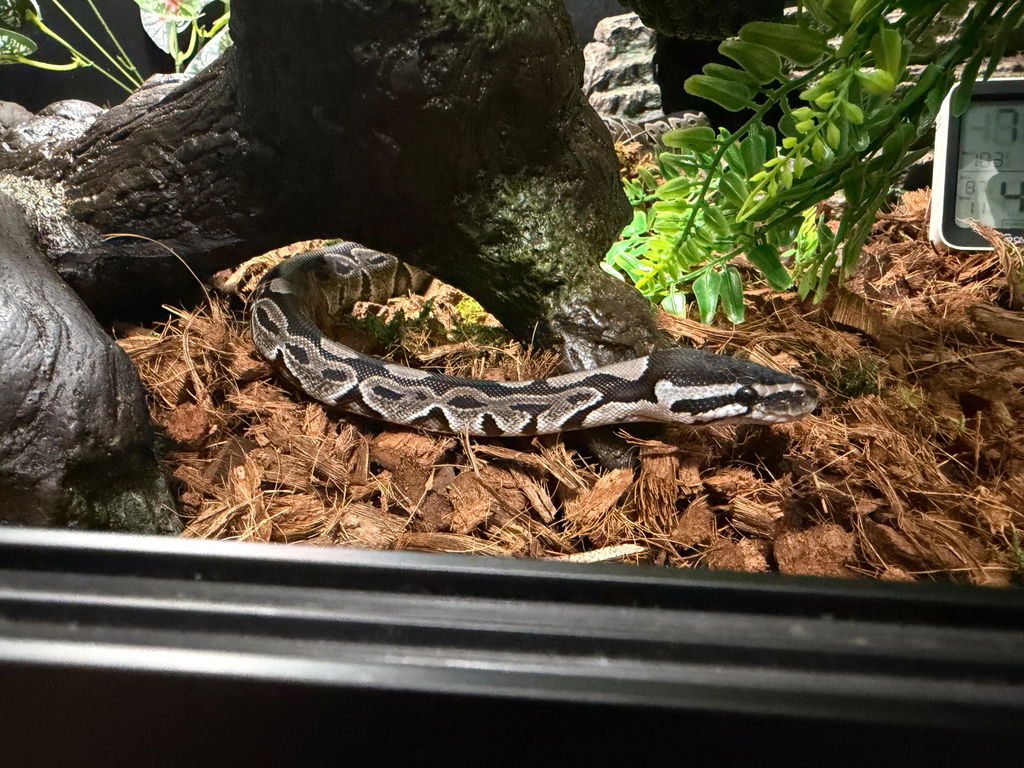
Ball python shedding problems are one of the most common concerns we hear from new keepers, and they're almost always fixable. After ten-plus years of breeding ball pythons in South Georgia and managing thousands of shed cycles across our collection, we can tell you that a bad shed is rarely random — it's your enclosure telling you something needs to change. The good news is that once you understand why shedding goes wrong, preventing it becomes straightforward. This guide covers what healthy shedding looks like, what causes problems, and exactly how to fix stuck shed when it happens.
How often do ball pythons shed?
Shedding frequency scales with growth rate, which slows as the animal ages:
- Hatchlings: Every 4–6 weeks
- Juveniles: Every 6–8 weeks
- Sub-adults: Every 8–12 weeks
- Adults: Every 3–4 months, sometimes less
These are approximations, not fixed intervals. Feeding frequency, enclosure temperature, and individual metabolism all play a role — an adult being fed aggressively for weight gain will shed more often than one on a maintenance schedule.
What a healthy ball python shed looks like
A healthy shed comes off in one complete piece, inside-out, like a snake-shaped sock. The process follows a predictable cycle. First, your ball python's colors will dull and its belly may turn pinkish. A few days later, the eyes cloud over with a bluish-white haze — keepers call this "going blue." After roughly two to four days, the eyes clear up, and within another day or two, the snake will rub its nose against a rough surface to break the skin at the lip line and crawl out of the old layer.
One common point of confusion for new keepers: clear eyes don't mean the shed is imminent. The actual shed typically happens two to four days after the eyes clear, not the moment they do. On shed day itself, the whole process — from the first rub against a rough surface to fully crawling out of the old skin — usually takes 30 to 60 minutes for a healthy animal.
The entire cycle from first color change to completed shed typically takes 10–14 days. Young, fast-growing ball pythons shed as often as every three to four weeks. Adults on a maintenance diet may shed every six to eight weeks. Frequency depends on growth rate, feeding schedule, and overall health — it's not a fixed interval.
After a good shed, inspect the skin. You should see clear eye caps and an intact tail tip. The shed skin will actually be longer than the snake because it stretches as it comes off. That's completely normal and doesn't mean anything is wrong.
The real reasons ball pythons have bad sheds
Low humidity is the cause of stuck shed in the overwhelming majority of cases. When the air inside the enclosure is too dry, the fluid layer that forms between the old and new skin doesn't develop properly, and the old skin clings instead of releasing. If your humidity is consistently below 60%, you will eventually see shedding problems. It's that simple.
But humidity isn't the only factor. Dehydration plays a role too. A ball python that doesn't drink enough — sometimes because its water bowl is too small, empty, or placed in a location the snake avoids — will produce drier skin with less lubricating fluid at shed time. We keep water bowls large enough for our snakes to soak in, and we change the water every two to three days.
Substrate choice directly affects enclosure humidity. Paper towels and aspen shavings hold almost no moisture and dry out quickly. Coconut husk, cypress mulch, and sphagnum moss hold moisture for days and create a more stable humid environment. If you're battling shedding problems, switching your substrate is often the fastest single fix.
Mites are an underappreciated cause of bad sheds. A snake dealing with a mite infestation will often shed in patches or pieces because the mites irritate the skin and disrupt the natural process. If you notice tiny black or red dots around your snake's eyes, in its water bowl, or between its scales, address the mites first — the shedding will correct itself once the parasites are gone.
How to fix a stuck shed safely
When you find retained shed on your ball python, don't panic, and don't start pulling. Pulling shed off a snake can tear the new skin underneath and create wounds that invite infection.
The safest approach is a humidity chamber. Take a clean plastic container with ventilation holes drilled in the lid. Line the bottom with warm, damp paper towels — not soaking wet, but thoroughly moistened. Place the snake inside, close the lid, and set the container in a warm spot (around 80–85°F) for 30 to 60 minutes. The trapped humidity softens the retained skin, and most snakes will work it off on their own as they move around.
If some skin remains after the humidity chamber, you can gently assist by letting the snake crawl through a warm, damp washcloth draped over your hands. The light friction helps without applying direct pulling force. For retained eye caps — which look like cloudy lenses still covering the eyes after a shed — use the humidity chamber method first. If the eye caps don't release after two sessions, see a reptile veterinarian rather than attempting removal yourself. Eye caps that are improperly removed can damage the spectacle underneath. Left unaddressed across successive sheds, retained eye caps can build up and eventually cause permanent eye damage.
Some keepers swear by warm-water soaking, and it can work, but it comes with real risk. Ball pythons are not natural swimmers, they stress easily in water, and there are documented cases of snakes drowning during unsupervised soaks. If you soak, use water no deeper than an inch or two, keep it lukewarm (80–85°F), supervise the entire time, and limit the session to 15 minutes.
Feeding and handling around the shed cycle
Once you notice the first signs of an upcoming shed — dull colors, pinkish belly — stop handling your ball python. Handling during the shed cycle stresses the snake and can disrupt the process. The oils from your hands can also interfere with the lubricating fluid between skin layers. Wait until at least 24 hours after the shed is complete before resuming handling.
Feeding timing matters too. Most ball pythons refuse food during shed, which is perfectly normal. Don't force the issue. If your snake is in blue, skip that week's feeding and offer a meal two or three days after the shed is complete. Trying to feed during active shed can lead to regurgitation, which is far more dangerous than a missed meal.
As a general rule, if your ball python is eating regularly and shedding cleanly every four to eight weeks, your husbandry is on point. The shed cycle is one of the best diagnostic tools you have.
When shedding problems signal something bigger
An occasional stuck shed in an otherwise healthy ball python usually means a temporary humidity dip and nothing more. Chronic bad sheds — three or more in a row — are a red flag that something in the environment or the snake's health needs attention.
Respiratory infections sometimes show up alongside poor sheds. If your snake is wheezing, holding its head elevated, producing mucus, or breathing with its mouth open, see a reptile vet promptly. Scale rot, which appears as discolored, soft, or blistered scales on the belly, can also cause abnormal shedding. Scale rot typically results from substrate that stays too wet — stagnant dampness with poor ventilation. The fix is cleaning the enclosure, improving ventilation, and treating mild cases with dilute betadine or chlorhexidine on the affected scales.
Retained shed on the tail tip can cut off circulation if left unaddressed, eventually causing tissue death and loss of the tail tip. Always check the tail after every shed. Retained eye caps that build up over multiple sheds can impair vision and lead to eye infections. Both situations warrant a vet visit if home remedies don't resolve them within a shed cycle or two.
How to prevent bad sheds before they start
Prevention comes down to maintaining a stable, well-humidified enclosure. Keep ambient humidity between 60–80% at all times, not just during shed. Provide a humid hide filled with damp sphagnum moss on the warm side. Use a moisture-retaining substrate. Keep the water bowl clean and full. Monitor humidity with a digital hygrometer.
If you live in a dry climate or your home has forced-air heating that saps moisture, consider upgrading to a PVC enclosure, adding a larger water bowl, misting the substrate every other day, or using a small room humidifier nearby. These small adjustments prevent the vast majority of shedding issues we see.
A well-cared-for ball python that sheds cleanly is a ball python that's set up to live 20 to 30 years in your home. If you're ready to start with a healthy, well-started snake raised in ideal conditions, explore our captive-bred ball pythons at Ghost Constrictors. Every animal ships with our live arrival guarantee and ongoing care support.
For more on care basics, see our Ball Python Care Guide and our Behavior & Body Language guide.