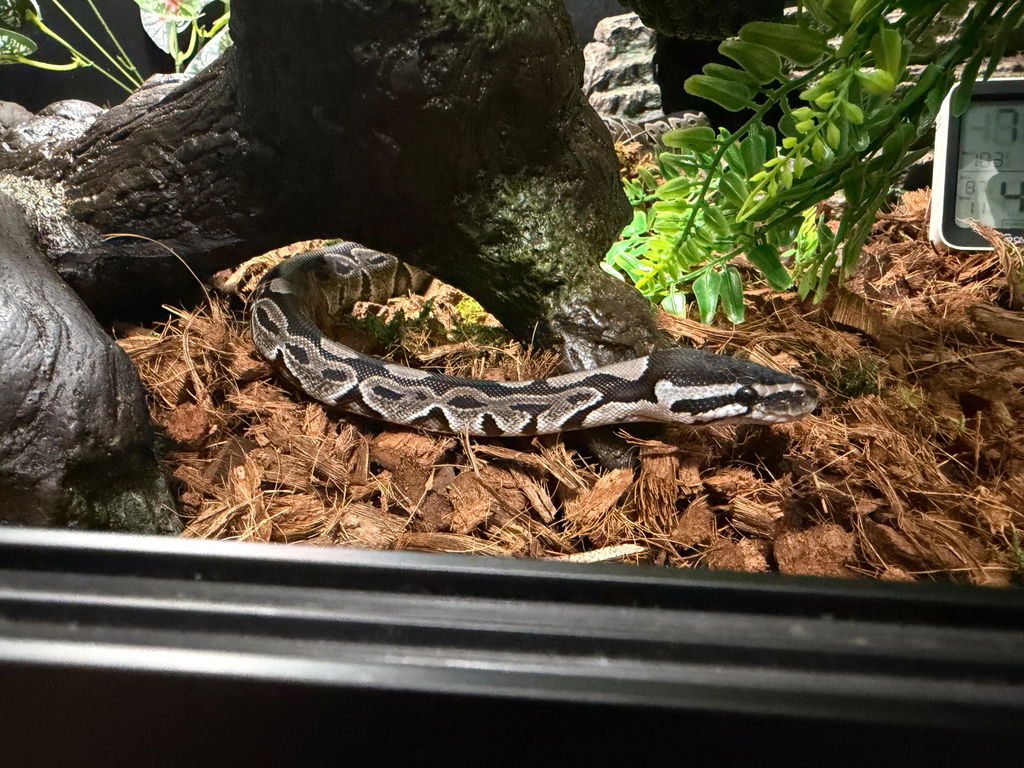
The Desert Ghost ball python is one of the most visually distinctive and genetically fascinating morphs in the entire hobby — and one of the most misunderstood. At Ghost Constrictors, Desert Ghost ball pythons are central to our breeding program, and we've watched this gene go from a niche collector's item to a cornerstone of serious multi-gene projects. In this guide we cover the genetics, the stunning combo potential, current pricing, and why Desert Ghost continues to command premium prices.
What a Desert Ghost ball python looks like
The Desert Ghost morph produces a ball python with dramatically reduced dark pigmentation, resulting in clean, washed-out tones — soft golds, tans, and muted browns that give the snake an almost bleached appearance. The pattern is present but subdued, with lighter and cleaner markings compared to a normal ball python. The belly tends to be cleaner and whiter than normal.
One of the most remarkable qualities of the Desert Ghost gene is how it ages. Most ball python morphs look their best as hatchlings and then darken or dull out as adults — breeders call this browning out. Desert Ghost is one of the rare exceptions. Visual Desert Ghosts often look better as adults, developing richer and more refined coloration over time. It also actively resists browning in other genes it's combined with, meaning your Desert Ghost pastel or Desert Ghost clown isn't going to lose its color as it matures the way those morphs sometimes do on their own. That's a significant advantage for any collection and a major reason serious breeders pursue this gene.
Desert Ghost genetics: the DGa and DGb discovery
Desert Ghost was first produced in captivity in 2003 by Mark and Kimberly Bell of Reptile Industries from founder animals with roots going back to Mike Ellard at Burgundy Reptiles. Desert Ghost was classified as a straightforward recessive gene — meaning both parents must carry it to produce a visual offspring.
Through testing of hundreds of Desert Ghost animals, researchers determined that Desert Ghost is a recessive mutation.
For practical breeding purposes, Desert Ghost functions like a recessive gene. Two visual Desert Ghosts bred together produce all visual offspring. Pairing a visual to a het produces roughly half visual and half het offspring.
The best Desert Ghost combos
Desert Ghost's signature effect — reduced pigment, clean color, anti-browning — makes it one of the most versatile combo genes in the hobby. It amplifies nearly everything it's paired with.
Desert Ghost Pastel is the classic starting point. Pastel already brightens yellows and reduces dark pigment, and Desert Ghost takes that to another level entirely — brilliant yellow-gold tones with an almost glowing quality. Prices for Pastel Desert Ghosts run $400 to $900 depending on additional genes and visual quality.
Desert Ghost Pied is one of the most stunning double-recessive combinations in the hobby. The Desert Ghost gene amplifies the yellow and gold tones in a piebald's patterned sections while the white blotches stay crisp. High-white Desert Ghost Pieds are considered investment-grade animals, with premium specimens reaching $2,000 and above.
Desert Ghost Clown produces animals with the clown's aberrant patterning amplified by Desert Ghost's color-enhancing properties — rich golds, reduced dark tones, and clean lines. Add Spotnose to the mix and you're working toward the Pompeii, one of the most valuable multi-gene combinations in the hobby.
Desert Ghost also combines beautifully with Genetic Stripe to produce a clean, high-contrast striped animal with brilliant color, and the combination with Spotnose creates animals with enhanced pattern contrast and that signature head stamp. These are the kinds of projects our breeding program is built around.
Desert Ghost prices and what drives value
Single-gene visual Desert Ghost hatchlings typically sell in the $300 to $600 range from reputable breeders. Het Desert Ghost animals sell for $75 to $200 depending on additional genes carried, reflecting their breeding value in producing visual offspring.
Multi-gene combinations scale significantly. Desert Ghost Pieds start around $800 to $1,200 for single-gene visual pieds and can reach $3,000 to $5,000 or more for high-white females with additional genes. Complex multi-gene animals carrying Desert Ghost alongside Clown, Genetic Stripe, or Spotnose represent some of the most valuable ball pythons on the market today.
Value is driven by visual expression quality, sex (females command 1.5 to 2 times male prices for breeding stock), proven versus unproven het status, additional gene count, and line purity.
Caring for a Desert Ghost ball python
Desert Ghost ball pythons have identical care requirements to any other ball python morph. The gene affects color and pattern only — not temperament, feeding response, or health. Warm side 88 to 92 degrees, cool side 76 to 80, humidity 60 to 80 percent, moisture-retaining substrate, two snug hides, clean water bowl. Feed appropriately sized frozen-thawed rats every 7 to 10 days for juveniles and every 10 to 14 days for adults.
If you're interested in adding Desert Ghost genetics to your collection — whether as a visual animal or as a het for a breeding project — explore our Desert Ghost ball pythons at Ghost Constrictors. We breed these animals in our South Georgia facility and ship overnight with a live arrival guarantee. Browse our full collection and reach out any time with project questions.
Want to see more morphs? Check out our Complete Ball Python Morph Guide, our Genetic Stripe Ball Python breakdown, and our VPI Axanthic Ball Python guide.