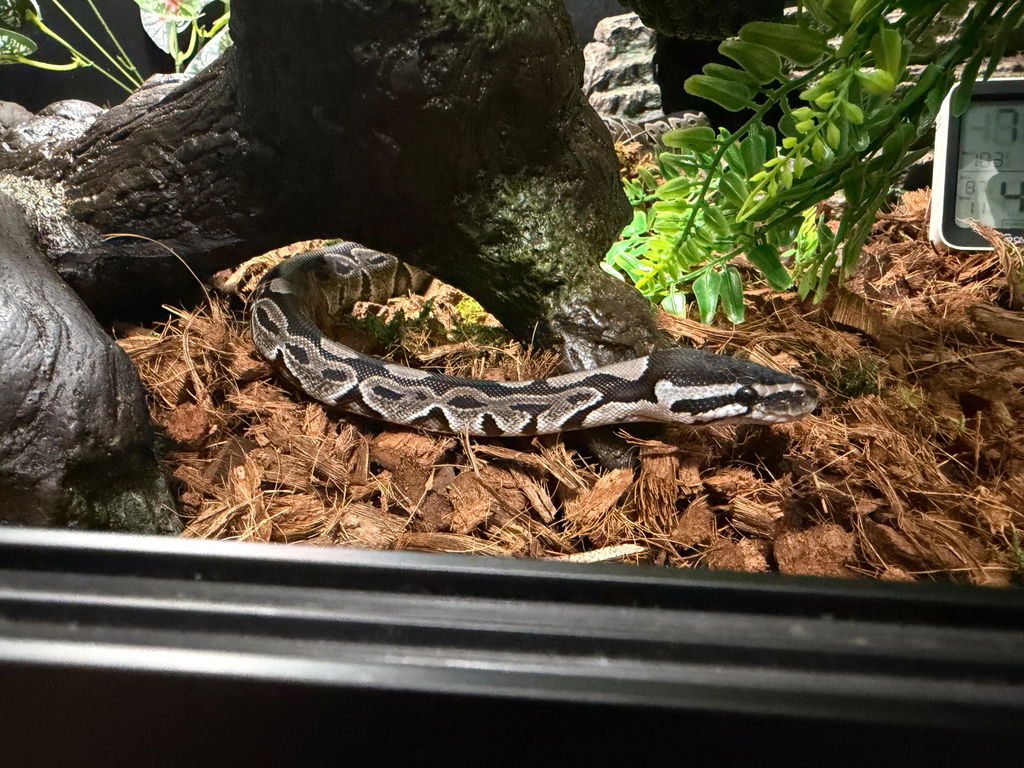
If you're somewhere between curious and convinced about getting a ball python, this is the guide you need to read first. After more than a decade of breeding ball pythons in South Georgia and answering this question for hundreds of first-time buyers, we've learned that the honest answer is sometimes yes, sometimes no — and the difference almost always comes down to whether someone understood what they were signing up for before they bought the snake. This guide gives you the straight talk, not the sales pitch.
What kind of animal a ball python actually is
Ball pythons are nocturnal, solitary, secretive animals. They spend most of their time hiding. In the wild, they live in burrows, rock crevices, and hollow logs in the grasslands and forests of West and Central Africa. Their instinct is to stay hidden, stay warm, and come out at night to hunt. In captivity, that doesn't change much. Your ball python will spend the majority of its day curled up in a hide box, motionless. If you're looking for a pet that moves around its enclosure all day and puts on a show, a ball python is going to disappoint you.
What ball pythons are is calm, handleable, and genuinely interesting once you understand them. Most well-raised ball pythons tolerate handling well and will relax in your hands after a minute or two of getting their bearings. They learn to recognize you over time, though not in the way a dog or cat does. They are non-venomous constrictors that max out at three to five feet for males and four to six feet for females — manageable for most living situations. They don't make noise, don't require outdoor exercise, and won't destroy your furniture.
The real commitment: 30 years
This is the piece that surprises most first-time buyers, and it's the most important one. Ball pythons routinely live 20 to 30 years in captivity with proper care, and some individuals have been documented past 40. When you buy a ball python, you are making a decades-long commitment — longer than most dogs, longer than many marriages. Before you buy, ask yourself honestly: where will you be in 20 years? Do you rent, and will future landlords allow reptiles? Do you travel, and can you arrange reliable care? Will your circumstances allow you to maintain this animal through major life changes?
This isn't meant to scare you off. Many of our best customers have kept their ball pythons for the long haul and treasure every year with them. But we've also seen animals surrendered to rescues by owners who didn't think through the commitment. A ball python deserves an owner who planned for the long game.
What taking care of one actually requires
Ball pythons eat pre-killed frozen-thawed rodents — mice as babies, appropriately-sized rats as adults. They eat once every seven to ten days as juveniles and every ten to fourteen days as adults. Feeding is straightforward once you're comfortable with it, and most snakes transition to frozen-thawed prey without issues. The feeding schedule is actually one of the things people love — no daily feeding, no constant food prep.
The enclosure needs to maintain a warm side of 88 to 92 degrees Fahrenheit and a cool side of 76 to 80 degrees at all times, with ambient humidity between 60 and 80 percent. This requires a thermostat-controlled heat source, a digital thermometer and hygrometer, and a moisture-retaining substrate. It's not complicated, but it is non-negotiable — get these parameters wrong consistently and the animal will develop health problems.
Initial setup costs typically run $300 to $600 for a quality enclosure, heating equipment, thermostat, substrate, and hides. Ongoing monthly costs are low — maybe $15 to $30 for food and substrate. The snake itself ranges from $50 for a normal to several thousand dollars for rare designer morphs. Vet care, when needed, requires a reptile-experienced vet and can run $100 to $300 or more per visit.
Who ball pythons are perfect for
Ball pythons are an excellent fit if you live in an apartment or small space and can't have a dog or cat. They're quiet, odorless when the enclosure is maintained, and don't bother neighbors. They're a strong choice if you work long hours and can't commit to daily care — a ball python genuinely does fine with minimal interaction as long as its environment is dialed in. They're great for people who are fascinated by reptiles and find the idea of observing a beautiful, ancient-looking animal in a naturalistic habitat genuinely appealing.
They're also a solid choice for people who eventually want to get into breeding. Ball python genetics are endlessly fascinating, the morph combinations are staggering in their variety, and the hobby has a strong community. A lot of people start with a single pet ball python and end up with a collection of breeding animals a few years later.
Who should think twice
Ball pythons are not the right pet if you expect an animal that will interact with you on its own terms. They don't seek out attention. They won't come to you when called, curl up next to you on the couch, or show obvious affection. If you need your pet to need you, you'll likely feel disconnected from a ball python over time.
They're not ideal if you have very young children who will handle the snake frequently without supervision. Ball pythons are docile, but they're still animals — a defensive response from a ball python, while minor, can be startling and isn't appropriate for unsupervised small children. They also carry salmonella in their gut flora, as do all reptiles, which means strict hand-washing before and after handling is mandatory in households with young kids or immunocompromised family members.
And they're genuinely not the right fit if you're squeamish about feeding rodents. You will be handling frozen mice and rats, thawing them, and offering them with tongs. It's manageable for most people, but it's worth being honest with yourself before you're standing over a defrosting rat having second thoughts.
The question we always ask first-time buyers
When someone reaches out to Ghost Constrictors about their first ball python, we always ask: have you ever held one before? If the answer is no, we encourage them to find a way to handle one before committing. Holding a calm, well-handled ball python for five minutes tells you more about whether this animal is right for you than any article can.
If you've held one and it felt right — if you were calm, curious, and not looking for a quick exit — that's a good sign. Ball pythons have a way of winning people over quickly. The weight of the animal in your hands, the way it moves, the feel of the scales — it's a different kind of connection than a mammal pet, but it's real.
If you've done your research and you're ready, we raise captive-bred ball pythons here in South Georgia and ship overnight across the country. Every animal comes from our family to yours with a live arrival guarantee and ongoing support. Browse our ball python collection and reach out with any questions before you buy — we'd rather answer a hundred questions upfront than have you feel unsure after the fact.
Still deciding? See our take on Do Ball Pythons Make Good Pets? and our guide for Convincing Your Parents.