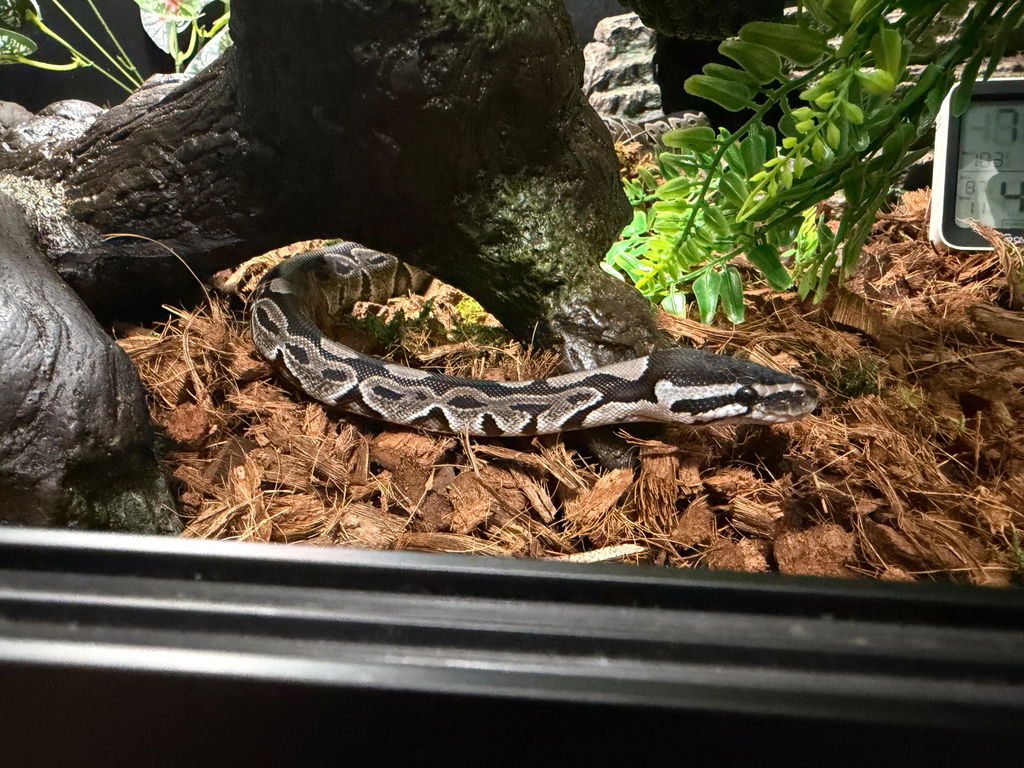
The Pastel ball python is one of the genes that started the entire morph hobby — a co-dominant color mutation that's been a staple of combo breeding for almost three decades. At Ghost Constrictors, Pastel genetics run through many of our projects, and in this guide we cover the genetics, the best combinations, current pricing, and what makes this gene such a foundational piece of the hobby.
What a Pastel ball python looks like
Pastel is a color and pattern enhancer, producing high-contrast yellow tones throughout the body along with distinctive "hook" and "ring" shaped alien head markings. Pastels typically show a soft "blushing" between the alien head outlines and often have green eyes, which can help identify them in a mixed clutch. The effect is strongest as a base for combos — Pastel is one of the most reliable genes for brightening yellows in whatever it's paired with.
Pastel genetics: a co-dominant gene proven in 1997
Pastel was proven as a genetic trait in 1997 by breeder Greg Graziani, who bred a wild-caught male with unusual coloration back to a normal female and produced an entire clutch of visually identical offspring — evidence the trait was genetic rather than incidental. Pastel is co-dominant: a single copy produces the visual Pastel appearance, and two copies produce Super Pastel, a lighter, higher-contrast version of the same base look. Pair a Pastel to a normal and roughly half the clutch will be visual Pastels.
The best Pastel combos
Pastel is arguably the single most-combined gene in the ball python hobby, because it brightens almost everything without fighting for visual dominance. Pastel paired with VPI Axanthic and Piebald produces some of the most sought-after combo animals in the hobby — we've bred Pastel Piebald VPI Axanthic combinations reaching well into four figures. Mojave Pastel and Super Pastel are classic pattern-and-color projects, and Pastel Enchi, sometimes called Super Enchi Pastel when doubled up, stacks two of the hobby's most versatile brightening genes together.
We also work Pastel into Hypo and Vanilla combinations, and Cinnamon Pastel and Chocolate Pastel projects, each pulling a different balance of darkness and brightness out of the base Pastel color.
Pastel prices and what drives value
Single-gene Pastel is now one of the more accessible morphs in the hobby, a long way from the $2,500 Graziani charged for his first animals in the late 1990s. Our own Pastel combinations have ranged from around $315 for simpler two- and three-gene animals up to $865 and beyond for complex combinations carrying Piebald and VPI Axanthic alongside Pastel. Value scales with gene count, visual quality, sex, and proven versus unproven het status on any recessive genes in the mix.
Caring for a Pastel ball python
Pastel ball pythons have identical care requirements to any other ball python morph — the gene affects color and pattern only, not temperament, feeding response, or health. Warm side 88 to 92 degrees, cool side 76 to 80, humidity 60 to 80 percent, moisture-retaining substrate, two snug hides, clean water bowl. Feed appropriately sized frozen-thawed rats every 7 to 10 days for juveniles and every 10 to 14 days for adults.
If you're interested in adding Pastel genetics to your collection — as a bright standalone animal or as the color engine behind a bigger combo project — browse our current ball pythons at Ghost Constrictors, including our VPI Axanthic and Pied collections where Pastel combos show up most. We breed these animals in our South Georgia facility and ship overnight with a live arrival guarantee. Reach out any time with project questions.
Want to see more morphs? Check out our Complete Ball Python Morph Guide, our Enchi Ball Python breakdown, and our VPI Axanthic Ball Python guide.