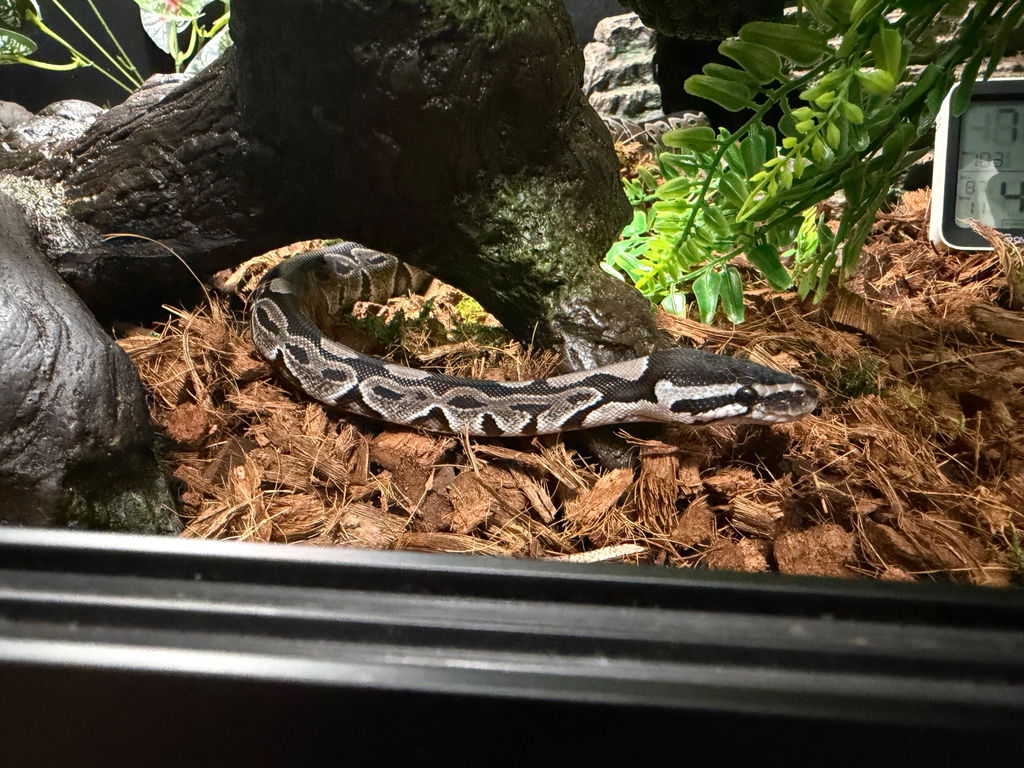
The Yellow Belly ball python is one of the more understated genes in the hobby — easy to overlook at first glance, but foundational to some of the most sought-after combo animals being bred today. At Ghost Constrictors, Yellow Belly genetics show up across a number of our projects, and in this guide we cover the genetics, the best combinations, current pricing, and what to look for if you're adding one to your collection.
What a Yellow Belly ball python looks like
A single-gene Yellow Belly looks close to a normal ball python at first glance — the tell is in the belly, which takes on a yellow-orange hue instead of the typical white, along with "flaming" markings that rise up between the alien head blotches along the lower sides. It's a subtle gene on its own, which is exactly why it's so valuable in combination — it adds warmth and flame patterning without overpowering whatever else it's paired with.
Yellow Belly genetics: part of a larger complex
Yellow Belly is an incomplete dominant gene — a single copy produces the visual Yellow Belly appearance, and two copies produce Ivory, also called Super Yellow Belly, a dramatically different white-to-cream animal. Yellow Belly also belongs to what breeders call the "Yellow Belly complex," a group of related genes that includes Asphalt — we work with both in our own program, and animals carrying Yellow Belly or Asphalt (sometimes labeled "Asphalt or Yellow Belly" until confirmed) are common in our current lineup.
The best Yellow Belly combos
Yellow Belly is a workhorse combo gene, particularly in "freeway" style projects that pair it with Black Head and Mahogany genetics for high-contrast, richly colored animals — we've bred Black Head Yellow Belly Asphalt and Black Head Enchi Yellow Belly combinations along these lines. Yellow Belly Clown and Spotnose Yellow Belly Clown combinations bring the flame pattern together with Clown's distinctive facial markings, and Lesser Yellow Belly Clown stacks in a third gene for even more contrast.
Genetic Stripe Enchi Pastel Yellow Belly Clown is the kind of five-gene combination that shows how far Yellow Belly can travel when stacked with other color and pattern genes — these complex multi-gene animals represent some of the more valuable projects in the hobby.
Yellow Belly prices and what drives value
Single-gene Yellow Belly is an accessible morph, and our own combinations have ranged from around $229 for simpler multi-gene animals up to $825 and beyond for combinations like Clown Spotnose Yellow Belly. Ivory (Super Yellow Belly) commands a meaningful premium over single-gene animals given the dramatic visual difference and the two Yellow Belly parents required to produce it. As always, value comes down to gene count, visual quality, sex, and proven versus unproven het status on any recessive traits in the mix.
Caring for a Yellow Belly ball python
Yellow Belly ball pythons have identical care requirements to any other ball python morph — the gene affects color and pattern only, not temperament, feeding response, or health. Warm side 88 to 92 degrees, cool side 76 to 80, humidity 60 to 80 percent, moisture-retaining substrate, two snug hides, clean water bowl. Feed appropriately sized frozen-thawed rats every 7 to 10 days for juveniles and every 10 to 14 days for adults.
If you're interested in adding Yellow Belly genetics to your collection — whether for the flame pattern on its own or as part of a bigger combo project — browse our current ball pythons at Ghost Constrictors, including our Clown and Genetic Stripe collections where Yellow Belly combos show up most. We breed these animals in our South Georgia facility and ship overnight with a live arrival guarantee. Reach out any time with project questions.
Want to see more morphs? Check out our Complete Ball Python Morph Guide, our Mystic Ball Python breakdown, and our Genetic Stripe Ball Python guide.